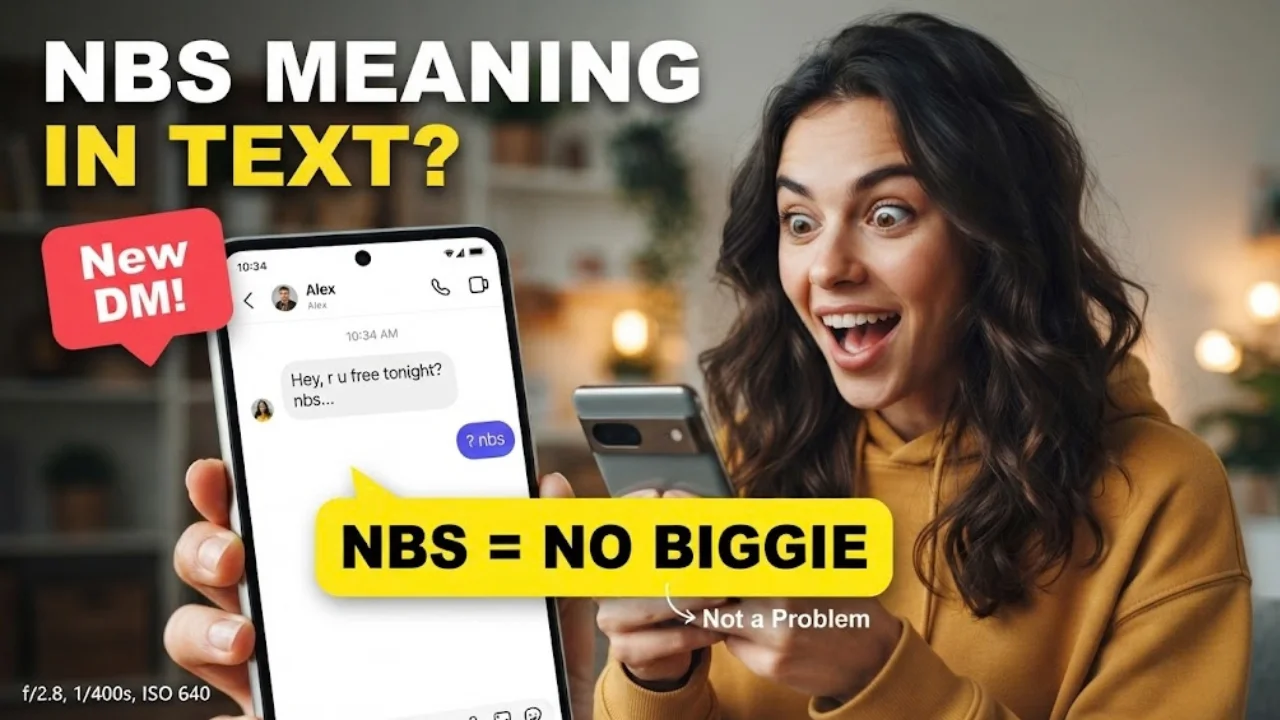
Someone texts you “nbs” and you stare at your phone, confused. You are not alone. Every day, people search for the NBS meaning in text because this short acronym pops up in DMs, comments, and group chats without warning.
The good news? NBS has one clear, common meaning in texting and on social media. This guide breaks it down fast, shows real examples, and clears up mix-ups with similar-looking terms like NSB and NBZ.NBS Meaning in Text.
Table of Contents
What Does NBS Mean in Text?
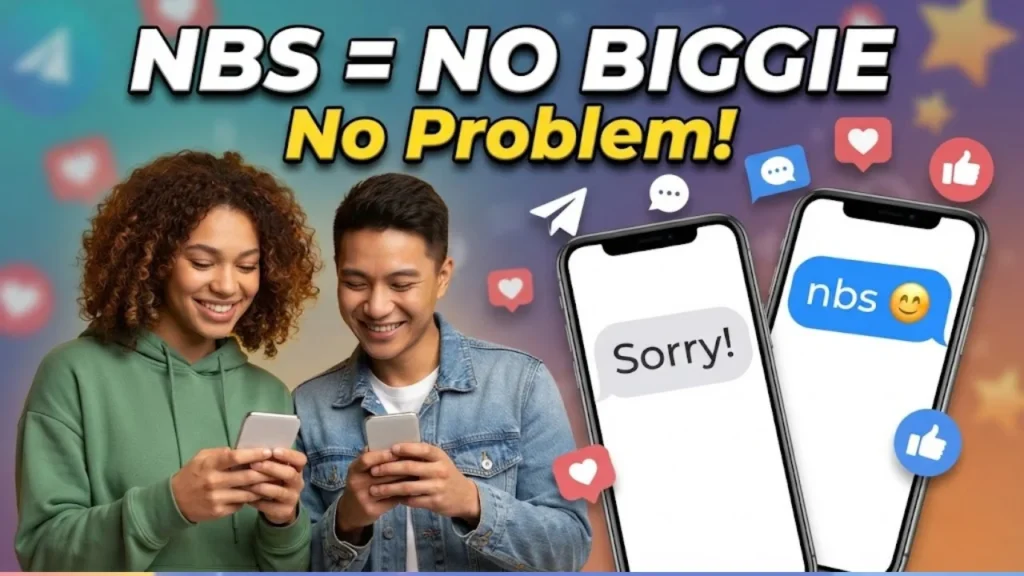
In texting and on platforms like Instagram, NBS stands for “no biggie.”NBS Meaning in Text.
People use it as a quick, casual way to say something is not a problem. It works like a shrug in text form — light, friendly, and low-effort.
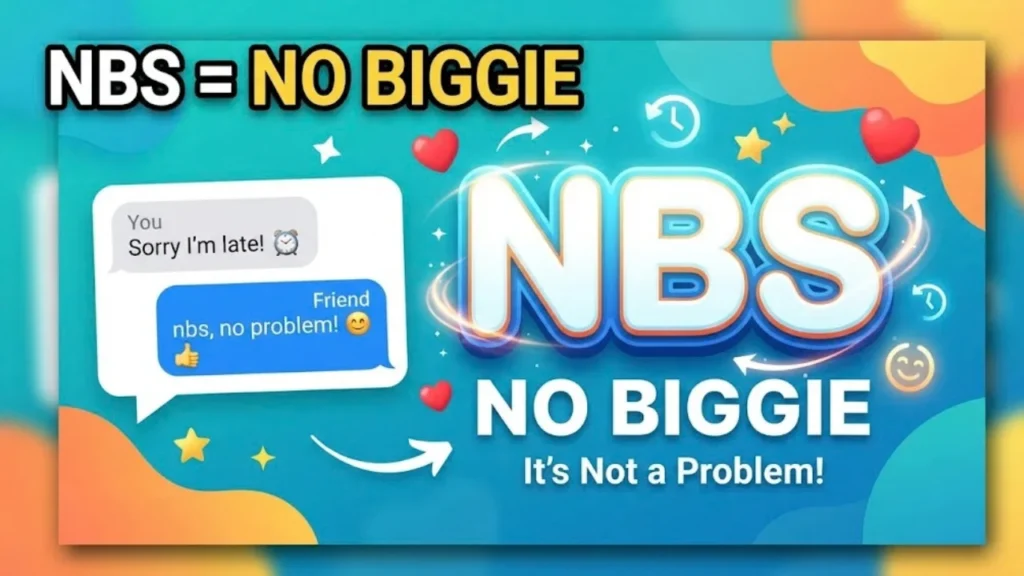
Here’s a simple example:
Friend: “Sorry I’m late!” You: “nbs, I just got here too”
This use case grew alongside other short reassurance phrases like “no worries” and “np” (no problem). All three do the same job: they tell someone not to stress. NBS just does it in three letters instead of two words.
It’s worth noting that outside of texting, NBS carries very different meanings in formal and technical writing — for example, the old U.S. National Bureau of Standards (now the National Institute of Standards and Technology) or National Building Specification in UK construction. Those meanings show up in dictionaries and industry documents, not in casual chat. Context is the key: if you saw it in a group chat or comment section, “no biggie” is almost always the answer.
How to Use NBS in a Sentence
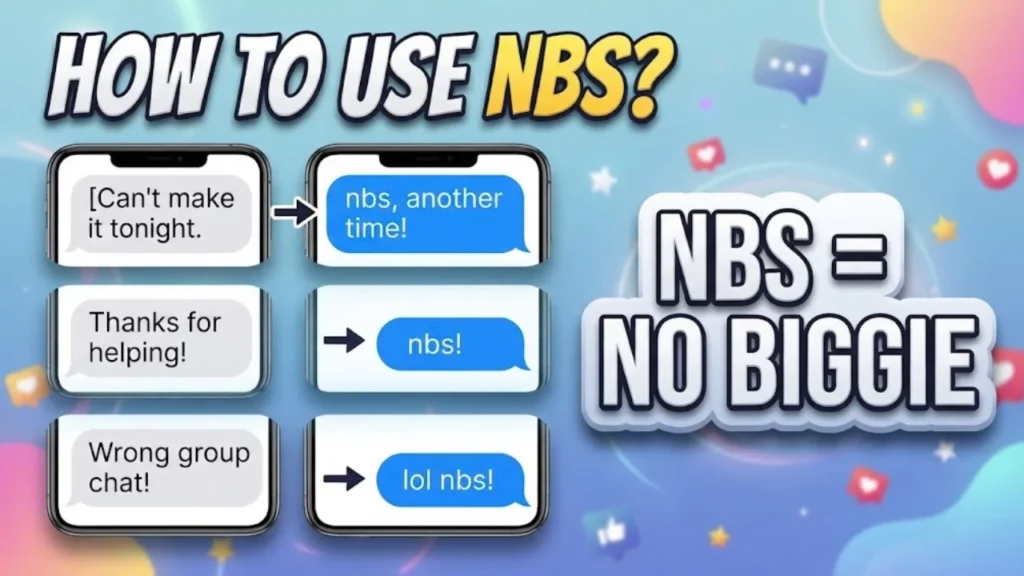
Once you know the meaning, using it feels natural. Here are a few real-style examples that show the tone.
Casual reassurance:
“Can’t make it tonight, something came up.” “nbs, we’ll do it another time”
Downplaying a favor:
“Thanks so much for helping me move!” “nbs at all, that’s what friends are for”
Responding to a mistake:
“Ugh, I sent that to the wrong group chat” “lol nbs, happens to everyone”
Notice the tone stays light in every case. NBS rarely shows up in serious or formal conversations. It belongs in casual texting, comment replies, and quick back-and-forth chats between friends.
NBS often gets mixed up with a couple of lookalikes. Here’s the quick difference.
NSB is usually just NBS with the letters swapped — a typo made when typing fast on a small keyboard. When people search “what does nsb mean in texting,” they’re almost always looking for the same “no biggie” meaning, just typed out of order. There isn’t a separate, established slang meaning for NSB in casual chat.
NBZ works the same way. It shows up mostly as a misspelling or shorthand variant of NBS, sometimes from autocorrect or quick typing where the “S” gets swapped for a “Z” for style (similar to how people write “coolz” instead of “cools”). There’s no widely recognized, separate definition for NBZ outside of this variant use.
The takeaway: if you see any of these three in a casual text, read them as the same friendly phrase — “no biggie.”
FAQ’s
What does NBS mean in texting?
NBS means “no biggie.” It’s a casual way to say something isn’t a problem, often used to reply to an apology or a thank-you.
What does NSB mean in texting?
NSB is generally a typo or letter-swap of NBS, carrying the same “no biggie” meaning.
What does NBS mean?
In texting, NBS means “no biggie.” Outside of texting, the same letters can stand for formal terms like the National Bureau of Standards, depending on context.
What does NBZ mean in text?
NBZ is typically a stylized or misspelled version of NBS, used the same way to mean “no biggie.”
Conclusion
NBSis a small acronym with one big, simple job: telling someone something isn’t a problem. Whether you see it as NBS, NSB, or NBZ, the meaning stays the same in casual texting — “no biggie.” Next time it shows up in your messages, you’ll know exactly how to read it.
Jack Waseem is the founder and lead editor of MeaningsLoop. He started the site out of a simple frustration: too many word-meaning searches online led to cluttered pages, thin definitions, and content clearly written for search engines rather than for people. Jack set out to build something closer to a well-kept paper dictionary — dependable, clearly written, and genuinely useful.