You saw “dw” in a text and paused. Was it a typo? A code word? Here’s the short answer: DW means “don’t worry.” It’s one of the simplest, most reassuring abbreviations in modern texting, and once you know it, you’ll spot it everywhere — from a friend’s WhatsApp reply to a TikTok caption.
This guide breaks down exactly what DW means in text, how real people use it, and when you should (and shouldn’t) type it yourself.
Table of Contents
What Does DW Mean in Text?
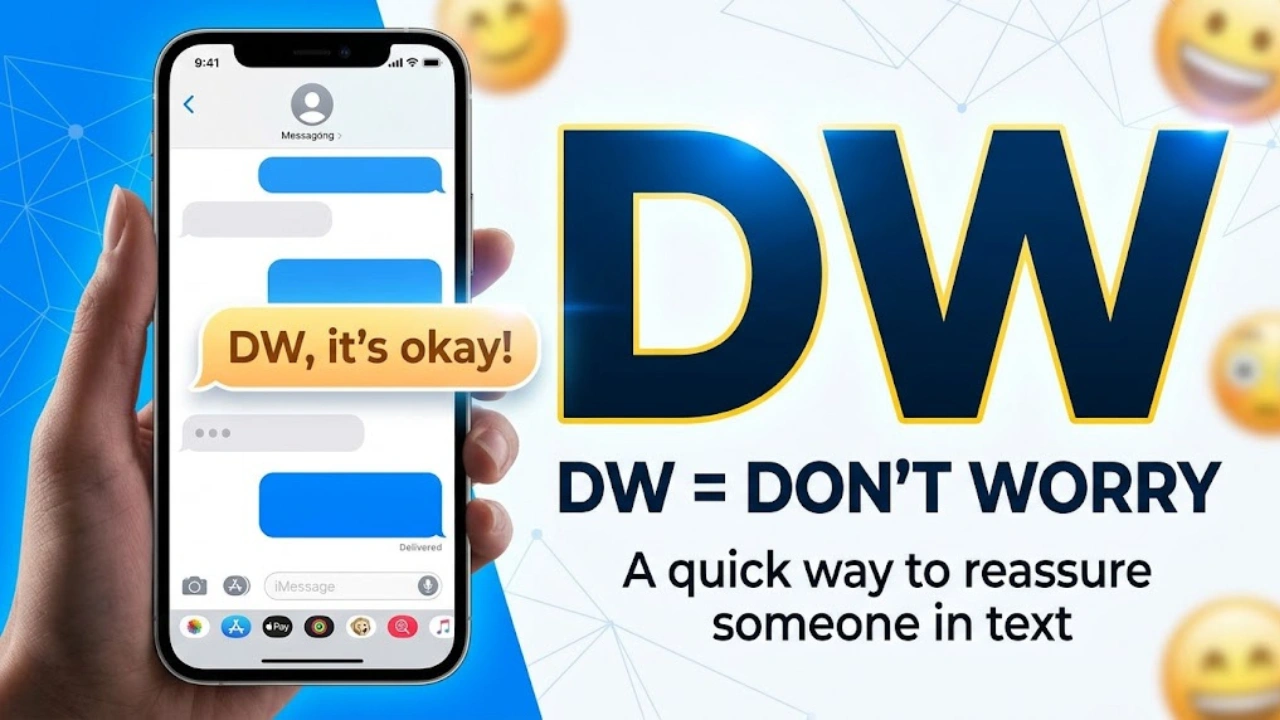
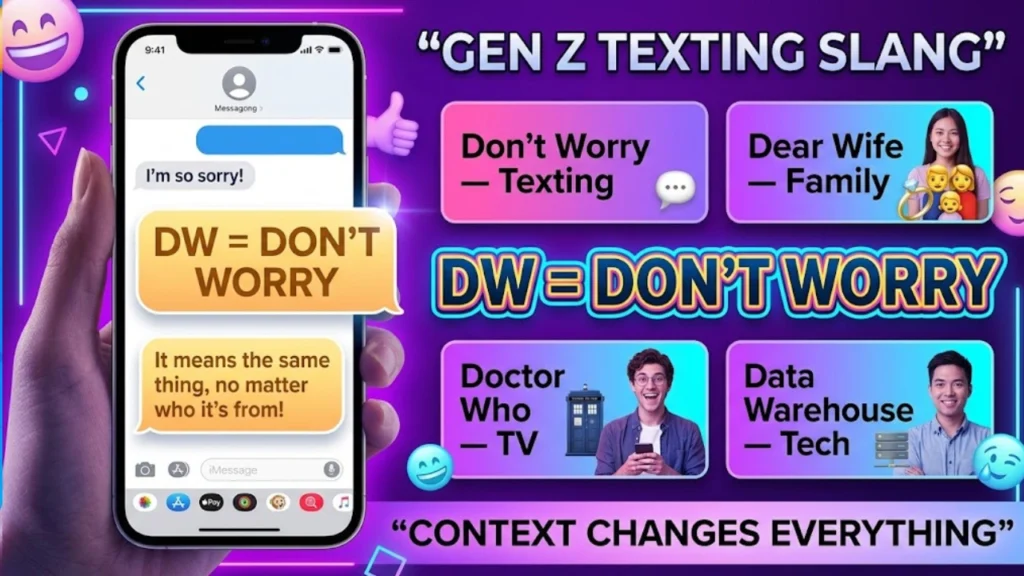
DW stands for “don’t worry.” People use it to calm someone down, brush off a small mistake, or say a situation is under control — all without typing a full sentence.
At its core, DW is a comfort word. It shows up right after someone apologizes, stresses about a mistake, or asks if something is okay. Instead of writing “don’t worry about it, it’s fine,” the sender just types DW, and the tone still lands.
This kind of shorthand grew alongside texting itself. As phone keyboards got smaller and conversations moved faster, abbreviated slang like DW, NVM, and IDK became a normal part of everyday digital communication. Linguists who study internet language point out that these short forms aren’t lazy writing — they’re efficient language, built for speed without losing meaning.
What does DW mean? In almost every casual chat, it means one thing: relax, it’s handled.
How to Use DW in Real Conversations
DW isn’t just a definition — it’s a tool people reach for in specific moments. Here’s how it plays out across different chats and platforms.
DW in Texting & DMs
In one-on-one texting, DW usually follows an apology or a worry. A friend cancels last minute and adds “dw, we’ll reschedule.” Someone forgets to reply for hours and opens with “dw, I just got busy.” It softens the moment and moves the conversation forward.
DW on TikTok, Snapchat & Instagram
On TikTok, DW often shows up in captions right after something looks risky or confusing, like “dw, I’m not actually pushing on my neck.” On Snapchat and Instagram, it’s common in direct messages between friends — quick, casual, and low-pressure. The meaning of DW stays identical across every app; only the setting changes.
DW as a Reply in Stressful Moments
This is where DW does the most work. Picture this real exchange:
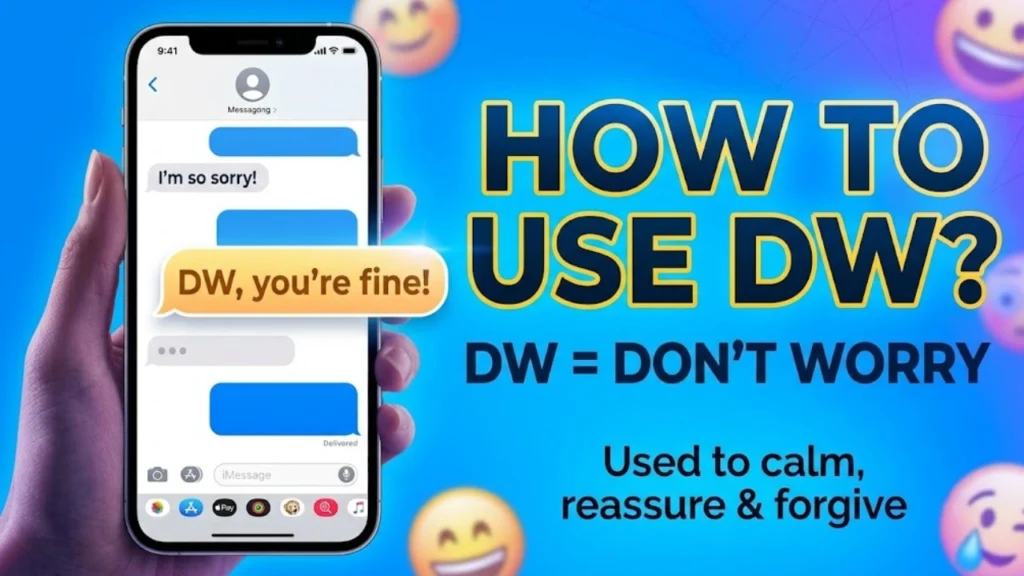
“I’m so sorry I broke your charger.”“DW, I have three more.”
Or:
“I’m freaking out about tomorrow’s exam.”“DW, you’ve got this.”
In both cases, DW isn’t a standalone phrase — it’s a direct response that closes the loop on someone’s worry in two letters.
Is DW Ever Spoken Out Loud? DW vs. “No Worries”
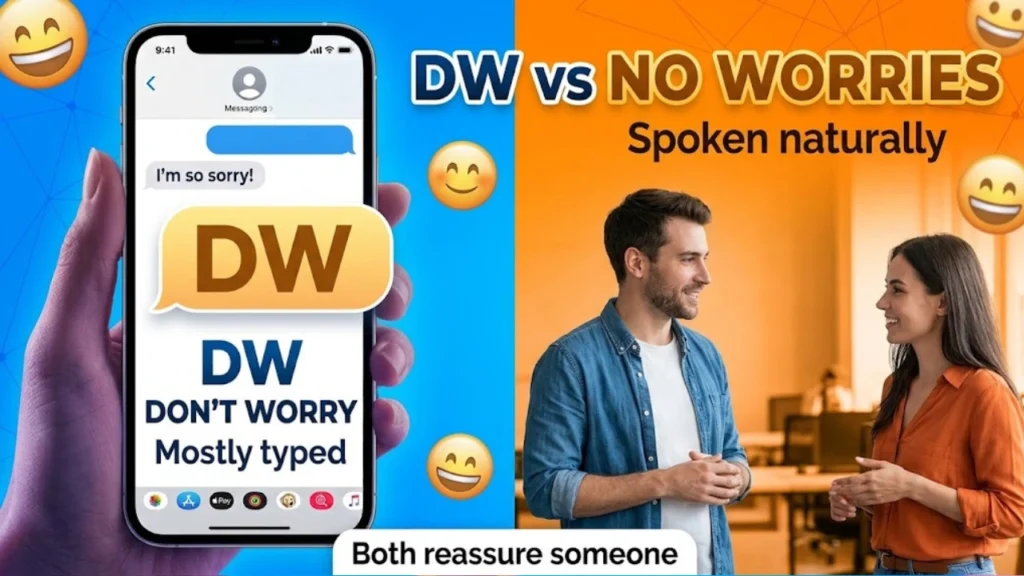
Here’s something most explainers skip: DW is a written abbreviation, not a spoken one. People rarely say “D, W” out loud in conversation. Instead, when speaking, they say the full phrase — “don’t worry” — or reach for its close cousin, “no worries.”
“No worries” has a different history. It started in Australian English, became a staple of everyday speech there, and later spread into American and British conversation, partly through Australian television and pop culture exposure. Unlike DW, “no worries” works just as naturally spoken aloud as it does typed.
So while both phrases mean roughly the same thing, they live in different spaces:
DW → typed, texted, captioned
No worries → typed and spoken, more universally accepted in voice conversation
For English learners especially, this distinction matters. Typing “dw” in a text is normal. Saying “dw” out loud will just confuse the person you’re talking to.
What Does DW Mean for a Girl, in Gen Z Slang, and in Other Contexts?
DW doesn’t change meaning based on who’s texting. But the way it’s used, and what else it can stand for, shifts depending on context.
DW Meaning in Gen Z Texting
Among Gen Z, DW is a staple of low-effort, high-warmth communication. It fits a broader texting style built around short reassurances — DW, NVM, IDC — that keep conversations light and drama-free. It’s not formal, it’s not dramatic, and that’s exactly the appeal: it lets someone show they care without over-explaining.
What Does DW Mean for a Girl?
DW means the exact same thing regardless of gender — “don’t worry.” There’s no separate or hidden meaning when a girl sends it versus anyone else. The phrase is gender-neutral slang, used identically by everyone in casual texting.
Other Meanings of DW
Context can shift DW’s meaning entirely:
DW Stands For
Where You’ll See It
Don’t Worry
Texting, social media
Dear Wife
Family or relationship chats
Doctor Who
TV and fandom discussions
Data Warehouse
Technology and business contexts
If a message about servers or spreadsheets includes “DW,” it’s almost certainly not about reassurance — it’s a technical acronym, not slang.
When Should You Use DW — and How Do You Respond to It?
Knowing when to use DW, and how to reply when someone sends it to you, rounds out the full picture.
Formal vs. Informal: When DW Works
DW belongs in casual settings — texts, group chats, social captions, and messages between friends or family. It does not belong in professional communication. Emails to a boss, client messages, or academic writing should stick to the full phrase, or skip the reassurance altogether. Using internet slang in a formal setting can come across as careless, even if that’s not the intent.
How to Respond to DW in a Text
How to respond to DW? Keep it just as light as the message itself. A simple “ok, thank you,” a quick “appreciate it,” or even a single emoji closes the exchange naturally. There’s no need to overexplain — matching DW’s energy is the whole point.
FAQ’s
What does “DW” mean?
DW means “don’t worry.” It’s used to reassure someone or downplay a small problem in a text or chat.
What is DW in chat slang?
In chat slang, DW is shorthand for “don’t worry.” It’s typed, not spoken, and appears across texting apps and social platforms as a quick way to comfort someone.
What does DW mean in Gen Z?
Among Gen Z, DW carries the same core meaning — “don’t worry” — but it’s used often, casually, and usually paired with short, low-drama replies that keep conversations relaxed.
What does DW mean for a girl?
DW means the same thing no matter who sends it — “don’t worry.” It’s not gender-specific slang; the meaning stays consistent across every user.
How to respond to DW?
Respond with something equally short: “thanks,” “appreciate it,” or a simple emoji. Matching the casual tone is more important than the exact words you choose.
Conclusion
DW means “don’t worry” — a small abbreviation that carries real warmth in everyday texting. It’s typed more than spoken, means the same thing across genders and generations, and works best in casual, friendly conversations rather than formal ones. Once you know how and when to use it, DW becomes second nature in any text thread.
Jack Waseem is the founder and lead editor of MeaningsLoop. He started the site out of a simple frustration: too many word-meaning searches online led to cluttered pages, thin definitions, and content clearly written for search engines rather than for people. Jack set out to build something closer to a well-kept paper dictionary — dependable, clearly written, and genuinely useful.