You’ve seen it in a text. You’ve heard it in a TikTok comment. Someone called their crush “edgy” or said a stranger “has an edge,” and you were left guessing what it actually meant.
Here’s the truth: edge meaning slang isn’t one single definition. It shifts depending on who says it, where they say it, and who they’re talking about. This guide breaks down every real-world use of the word, backed by facts, not guesswork.
What Does Edge Mean? Dictionary vs Slang Definition
Before diving into slang, it helps to know where the word started.
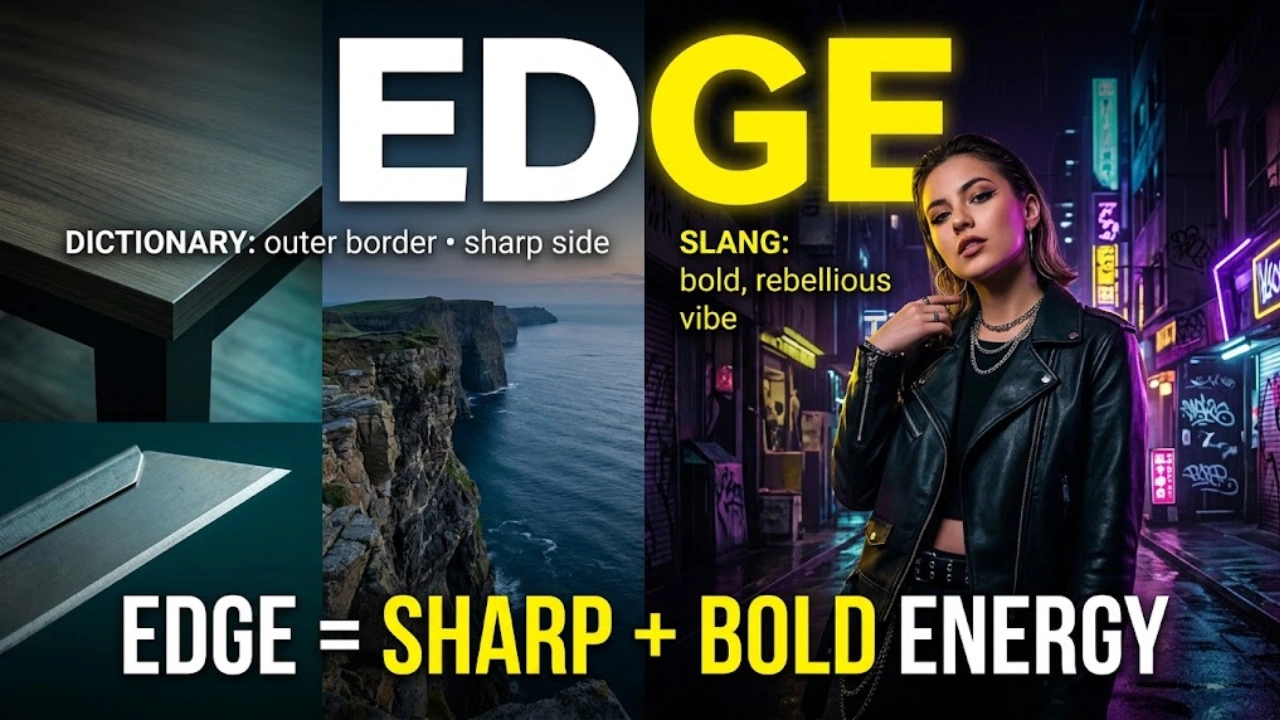
In plain English, edge means the outer border of something — think the edge of a table or a cliff. It also describes the sharp side of a blade. From there, English speakers stretched the word into something bigger: advantage. Someone with more experience “has an edge” over their competitors.
Slang took this idea of sharpness and advantage and turned it into a personality descriptor. When people say someone “has edge” today, they usually mean the person feels bold, unpredictable, or slightly dangerous — in a magnetic way. It’s less about blades now and more about vibe.
Words rarely appear out of nowhere, and edge is no exception.
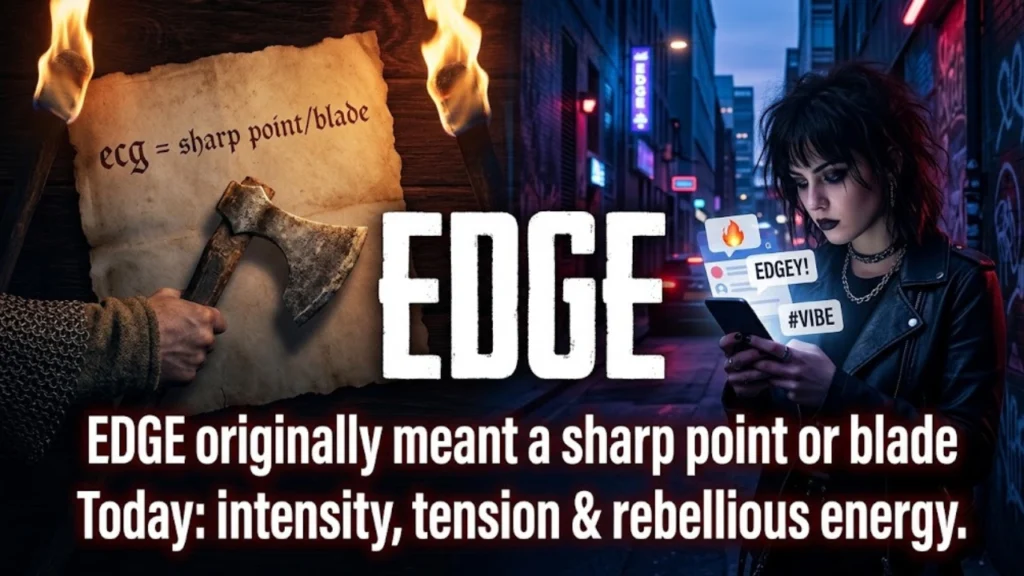
The word traces back to Old English “ecg,” meaning a sharp point or blade. For centuries, it stayed literal — cutting tools, cliffs, borders. Somewhere in the 20th century, English speakers began using it figuratively for tension and intensity, as in “there’s an edge to her voice.”
Slang dictionaries have long tracked informal uses of the word tied to heightened emotion and intensity, which laid the groundwork for today’s usage. From there, internet culture pushed it further, turning “edge” into shorthand for rebellious energy, the kind you’d associate with dark humor, unconventional style, or a devil-may-care attitude. This is where edgy and edgelord were born, two close cousins of the word you’ll see constantly online.
Edge Meaning in Gen Z Slang
Among younger internet users, edge slang has taken on its own flavor, separate from older generations.
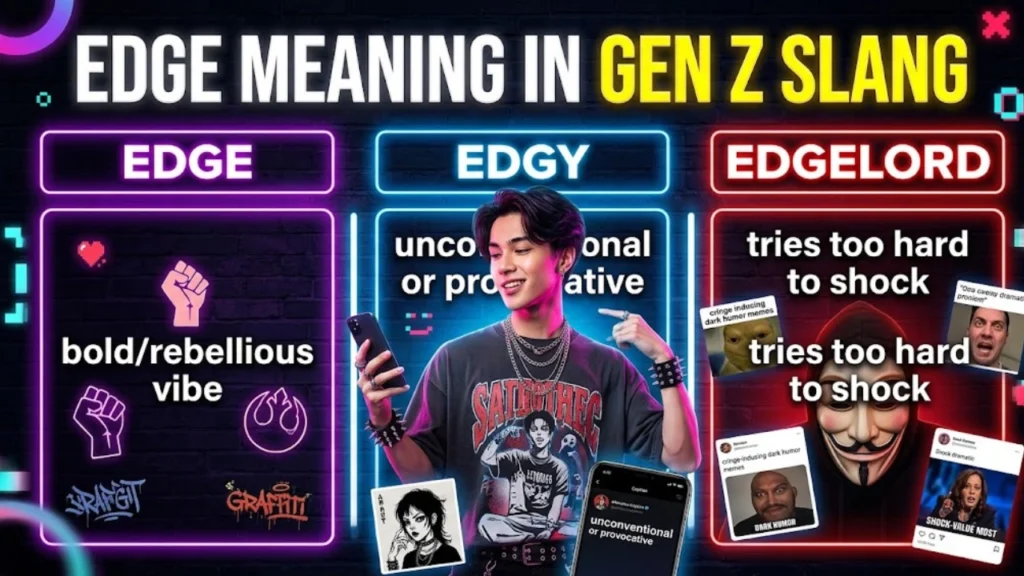
On platforms like TikTok and Twitter, calling someone or something “edge” or “edgy” usually signals dark humor, provocative jokes, or an aesthetic that pushes against the mainstream. It’s often tied to shock value — content designed to feel a little taboo or unfiltered.
There’s a key distinction worth knowing: edgy describes the trait itself, while an edgelord is someone who leans into shocking or offensive humor purely for attention, often losing the charm the word originally implied. Gen Z frequently uses this distinction to separate someone who’s genuinely interesting from someone who’s just trying too hard.
Edge Meaning in Dating and Relationships
In dating conversations, “edge” carries a very specific emotional charge.
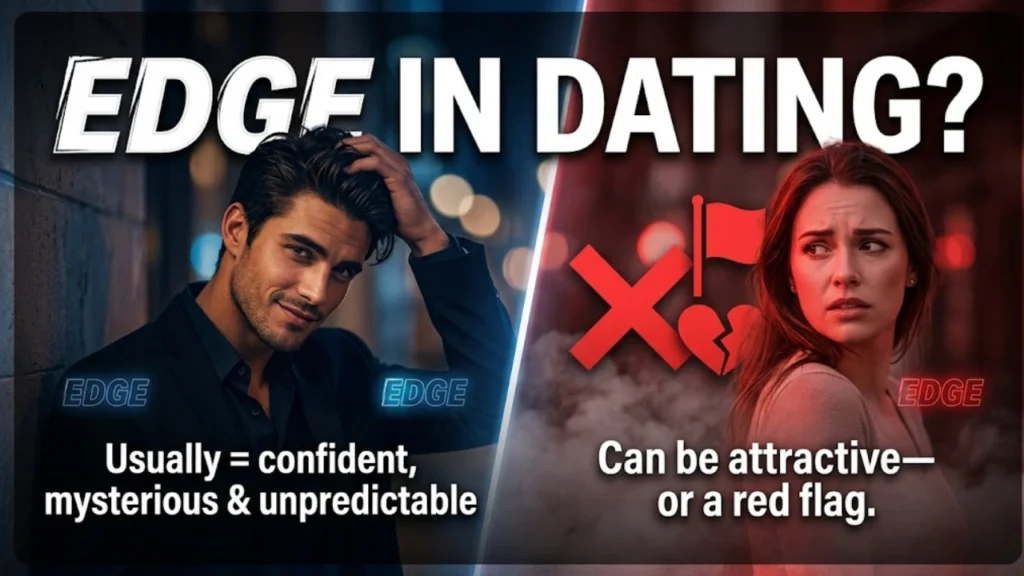
When someone says a date or partner “has an edge,” they usually mean this person feels a little unpredictable, confident, or mysterious — traits that can read as attractive or as a warning sign, depending on context. It often shows up in phrases like “he’s got that edge to him” or “she has an edgy energy.”
This dual meaning matters. In healthy contexts, edge signals confidence and self-assurance. In riskier contexts, it can hint at emotional unavailability or unpredictability — the kind of person dating advice columns often flag as a red flag disguised as charisma. Context and behavior always matter more than the label itself.
Edge Meaning for Boys and Men
Among young men, edge slang often connects to social status and image.
Describing a guy as having “edge” typically points to confidence, a distinct style, or a slightly rebellious streak — traits often associated with social appeal in peer groups. It’s frequently used as a compliment, implying someone stands out instead of blending in.
However, the term can flip negative fast. If someone is described as “trying too hard to have edge,” it usually means their rebellious image feels forced rather than natural. Authenticity is the real dividing line between having edge and faking it.
FAQ’s
What is edge in Gen Z slang?
In Gen Z slang, edge describes something bold, dark-humored, or unconventional — content or a personality that pushes past mainstream norms. It’s closely linked to edgy humor and aesthetics popular on TikTok and Twitter.
What does edge mean in dating?
In dating, edge describes a partner who feels confident, unpredictable, or mysterious. It can be a genuine compliment or a subtle warning sign, depending on how that unpredictability shows up in real behavior.
What does edge mean in a person?
When describing a person, edge means they carry a bold, slightly rebellious presence — someone who stands out through confidence, style, or attitude rather than blending into the crowd.
What does edge mean for boys?
For boys and young men, edge usually signals confidence and a distinct, rebellious style that boosts social appeal. It turns negative only when the image feels forced instead of natural.
Conclusion
Edge meaning slang isn’t fixed — it bends across dating, personality, and Gen Z culture, but the core idea stays the same: sharpness, confidence, and a little unpredictability. Knowing the context is the real key to understanding it correctly every time you hear it.
Jack Waseem is the founder and lead editor of MeaningsLoop. He started the site out of a simple frustration: too many word-meaning searches online led to cluttered pages, thin definitions, and content clearly written for search engines rather than for people. Jack set out to build something closer to a well-kept paper dictionary — dependable, clearly written, and genuinely useful.