You see “asl” in a text and freeze. Is it a question? A compliment? A red flag? It depends on who sent it, where, and how it’s written.
This guide breaks down every meaning of ASL in text — with real examples — so you know exactly what someone means the next time it shows up in your chat.
Table of Contents
What Does ASL Mean in Text? (Quick Answer)
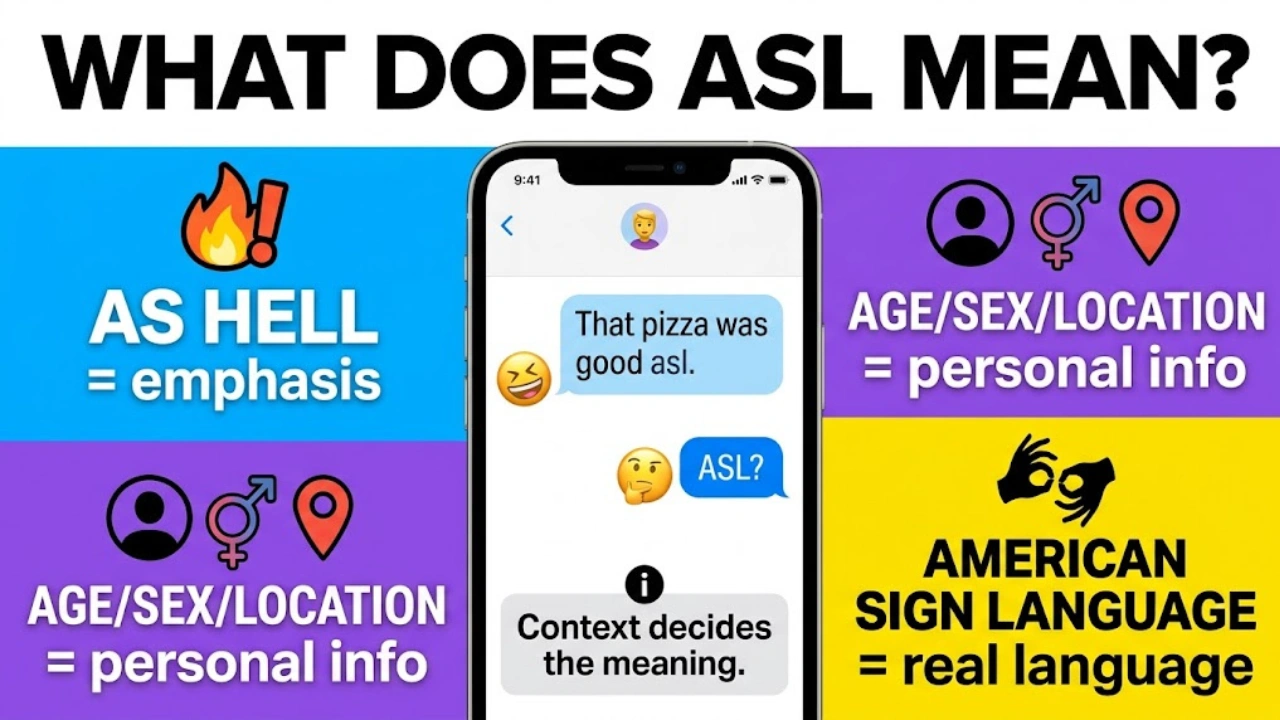
ASL has three common meanings, and context decides which one applies.
“As hell” — an intensifier. Example: “That pizza was good asl.”
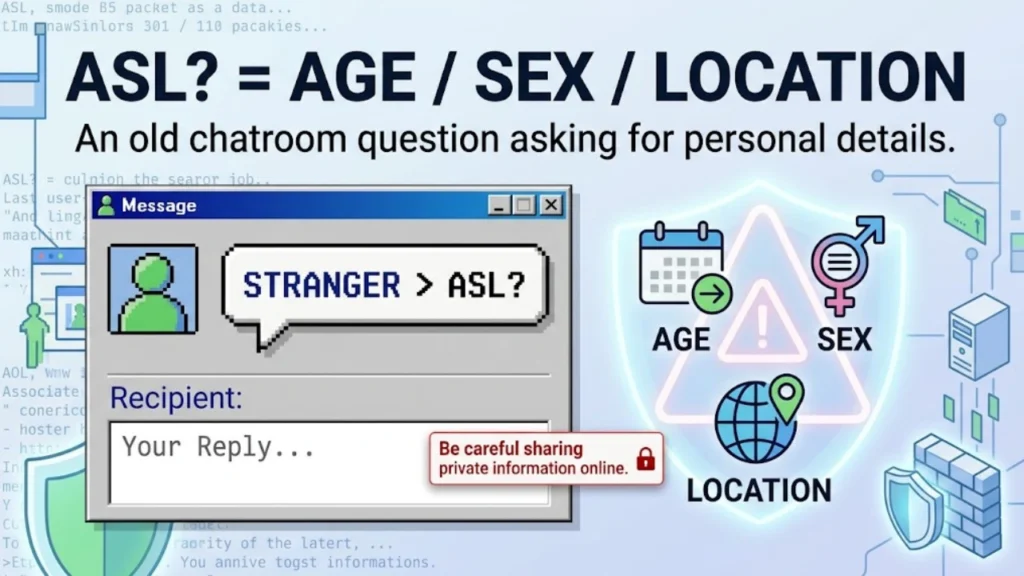
“Age/sex/location” — an old chatroom question from the early internet days.
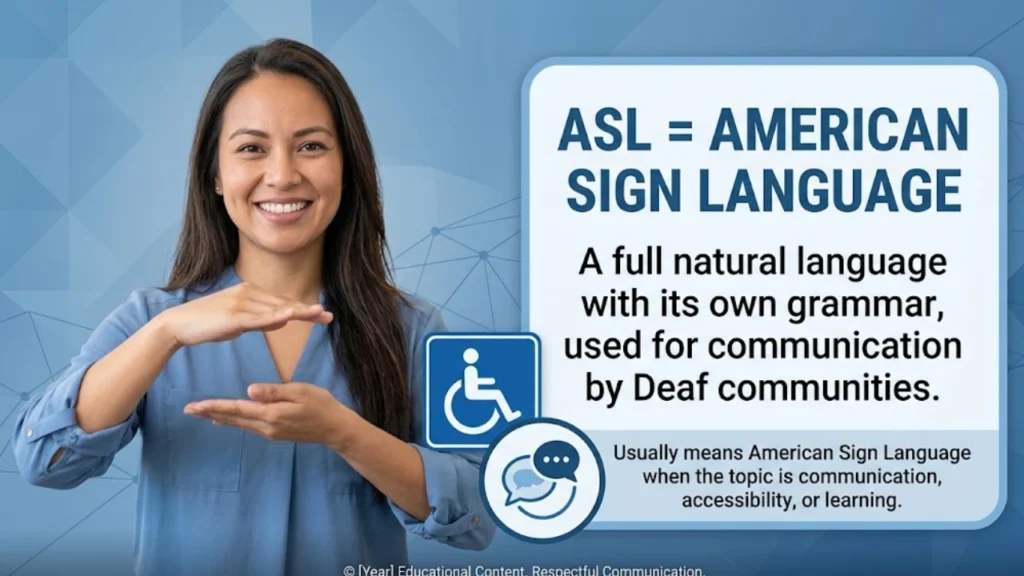
American Sign Language — the real, official language used by Deaf and hard-of-hearing communities in the US.
Here’s the fast rule: if “asl” shows up after an adjective with no question mark, it almost always means “as hell.” If it appears alone as “ASL?”, it’s usually the older age/sex/location question.
Each version of ASL came from a different era of internet culture, and each one still shows up today.
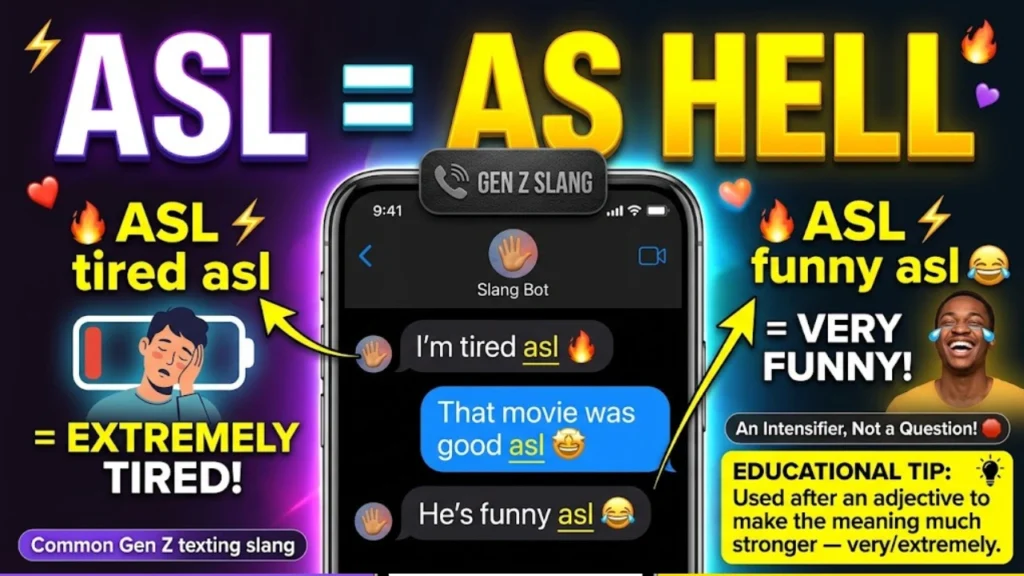
ASL as “as hell” is the newest and most common version among Gen Z. It works like a contraction — you drop it right after a describing word to make it stronger. It started gaining traction online around 2018, when confused users on Twitter began pointing out that “asl” no longer meant what it used to. Today it’s everywhere on TikTok, Instagram, and Snapchat captions.
ASL as “age/sex/location” is much older. It was born in 1990s and early-2000s chatrooms and instant messaging apps, back when strangers met online with almost no profile info. Asking “ASL?” was a fast way to learn three basics about a stranger. This meaning is largely outdated now, and seeing it can be a sign the sender is using old-school internet habits — or fishing for personal details.
ASL as American Sign Language is not slang at all. It’s a full, natural language with its own grammar, created in the early 1800s and used daily by Deaf and hard-of-hearing communities across the United States and parts of Canada. When ASL shows up in a sentence about learning, accessibility, or communication, this is the meaning in play — not internet shorthand.
How to Tell Which ASL Meaning Is Being Used
Context clues make this easy once you know what to look for.
Position in the sentence: After an adjective (“tired asl”) means “as hell.” Standing alone (“ASL?”) usually means age/sex/location.
Capitalization: Lowercase “asl” is almost always casual slang. Uppercase “ASL” leans toward the age/sex/location question or the sign language.
Punctuation: A question mark after ASL signals someone is asking for info, not making a statement.
Platform: TikTok comments and Instagram captions lean toward “as hell.” Discord servers, older forums, or gaming chats sometimes still use the age/sex/location sense.
A quick example: “She’s smart asl” is a compliment. “ASL?” sent cold by a stranger is a request for personal details.
ASL in Real Sentences & Slang Examples
Seeing ASL used in real sentences makes the meaning click faster than any definition.
Examples of ASL meaning “as hell”:
“I’m bored asl right now.”
“This weather is cold asl.”
“He’s funny asl, I can’t stop laughing.”
“She’s asl smart, she finished the test first.”
Examples of ASL meaning “age/sex/location”:
“Hey, nice to meet you. ASL?”
“New here, asl?”
You’ll also see spelling variants like A/S/L (with slashes) in older chat logs, and both ASL and asl used interchangeably depending on how casual the writer feels.
Is ASL Safe to Use or Respond To?
Safety depends entirely on which meaning is being used.
The “as hell” version is harmless. It’s just casual slang used to add emphasis, the same way people once used “really” or “super.”
The “age/sex/location” version needs more care. This question was designed to pull personal details — age, gender, and where someone lives — out of a stranger fast. Getting this question from someone you don’t know, especially on social media or gaming platforms, is a reason to pause before answering. Sharing exact age or location with strangers online carries real privacy risk, and this applies to anyone chatting with people they haven’t met in person, not just teens.
If ASL shows up in a flirty or sexual context, it’s typically still functioning as an intensifier (“cute asl,” “hot asl”) or as a request for personal details before the conversation goes further. Either way, the same rule applies: know who’s asking, and don’t share identifying details with someone you don’t actually know.
What does ASL mean in texting slang? In texting, ASL most often means “as hell,” used right after an adjective to add emphasis. Example: “This show is good asl.”
What does “I’m bored asl” mean? It means “I’m bored as hell” — extremely or very bored. The word “asl” is simply intensifying “bored.”
What does ASL mean in chat? In chat apps and gaming platforms, ASL can still mean “age/sex/location,” an older question used to learn basic details about a stranger. Context and platform determine which meaning applies.
What does “she’s asl” mean? This means “she’s as hell,” followed by whatever word comes next, such as “she’s smart asl” (very smart) or “she’s funny asl” (very funny).
What is ASL in sext? In flirty or sexual texting, ASL is usually still the age/sex/location question, used to learn who someone is before the conversation continues, or it functions as an intensifier attached to a compliment. The safest approach is to avoid sharing personal identifying details with anyone you haven’t met in person.
Conclusion
ASLisn’t one word with one meaning — it’s three. Read the sentence, check the punctuation, and consider the platform, and the right meaning becomes obvious almost every time.
Jack Waseem is the founder and lead editor of MeaningsLoop. He started the site out of a simple frustration: too many word-meaning searches online led to cluttered pages, thin definitions, and content clearly written for search engines rather than for people. Jack set out to build something closer to a well-kept paper dictionary — dependable, clearly written, and genuinely useful.