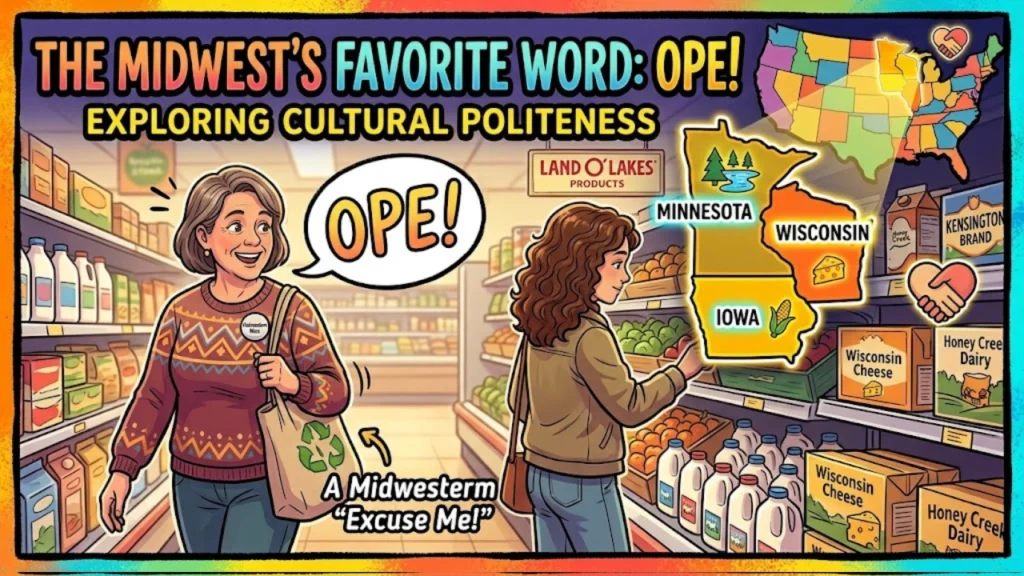
You bump into someone at the store. You send a text to the wrong group chat. Your first word is probably not “sorry.” It’s “ope.”
If you’ve seen this word pop up in a text and wondered what it means, you’re not alone. “Ope” is a short, friendly reaction to a small mistake or surprise — and its real backstory is more interesting than most people realize.
Table of Contents
What Does “Ope” Mean? (Quick Definition + Text Message Meaning)
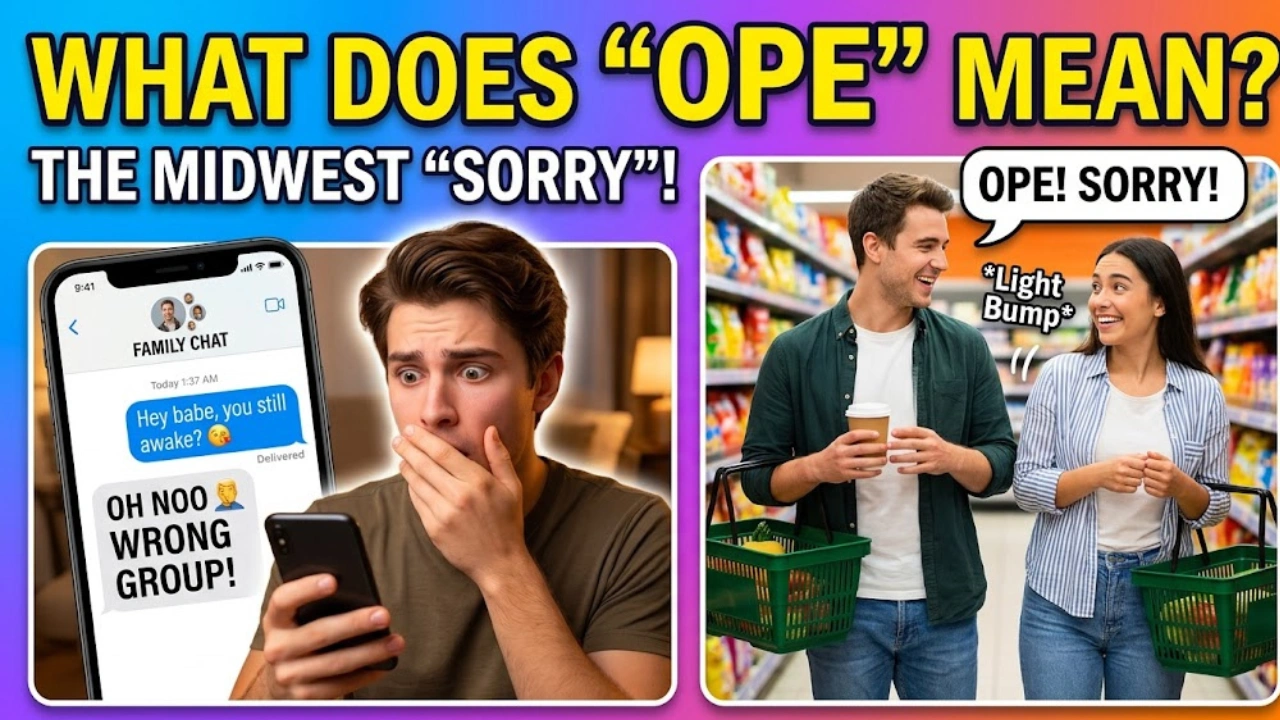
Here’s the short answer: “ope” means a small, gentle reaction to surprise, mild embarrassment, or a minor slip-up.
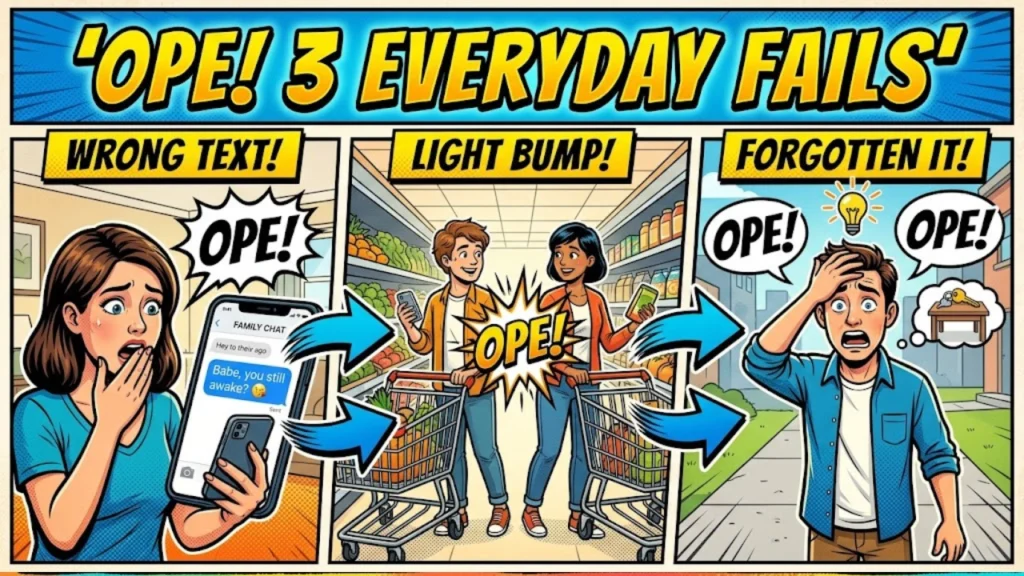
It works a lot like “oops” or “oh.” People type it when they:
Send a message to the wrong person
Bump into someone
Interrupt a conversation by accident
Suddenly remember something they forgot
A few real examples:
“Ope, wrong chat, ignore that lol” “Ope — didn’t realize you were on a call.” “Ope, forgot to send this earlier.”
One important fact: “ope” is not an acronym. It doesn’t stand for anything. It’s simply the written spelling of a sound people already make out loud, according to Dictionary.com. That’s a key difference between “ope” and true text abbreviations like “brb” or “idk.”
Where Does “Ope” Come From? The Real Origin (Not Just Midwest Slang)
Most people assume “ope” is pure Midwest slang. The real story is a little more scientific — and it comes straight from a linguist.
While “ope” is often used in casual conversations to express surprise, hesitation, or a quick apology, some people also look for deeper meanings behind the numbers and signs they encounter in everyday life. For example, the spiritual meaning of angel number 222 is often associated with balance, harmony, patience, and trusting the path ahead.
Grant Barrett, co-host of the public radio show A Way With Words, told Wisconsin Public Radio that “ope” isn’t really a word in the traditional sense. It’s a physical reflex sound.
Here’s how it happens: when you suddenly stop talking or moving mid-action, your lips naturally close. That closing motion creates what linguists call an excrescent “p” — a sound your mouth makes by accident, not one borrowed from Latin, French, or Greek roots. Barrett describes it as a bilabial stop, meaning both lips briefly block the airflow. That’s the same mouth movement behind “oops,” “nope,” and “yep.”
So “ope” didn’t come from “oops.” According to Barrett, it’s actually the other way around — the spoken sound came first, and “oops” is just the formal, written version of it.
There’s also a reason “ope” feels so Midwestern, even though it isn’t only used there. Barrett points to two linguistic ideas:
Markedness — when a group notices a habit is “typical of them,” they keep noticing it, and it becomes part of their identity.
The recency illusion — once people start noticing a word (often thanks to memes), they assume it’s new or exploding in popularity, even when it’s been around for years.
People in the Midwest have simply talked about “ope” more, which made it feel regional. But Barrett notes self-reports of the same sound across the United States, Canada, and even the United Kingdom.
Who Says “Ope”? Regional, Generational & Cultural Usage
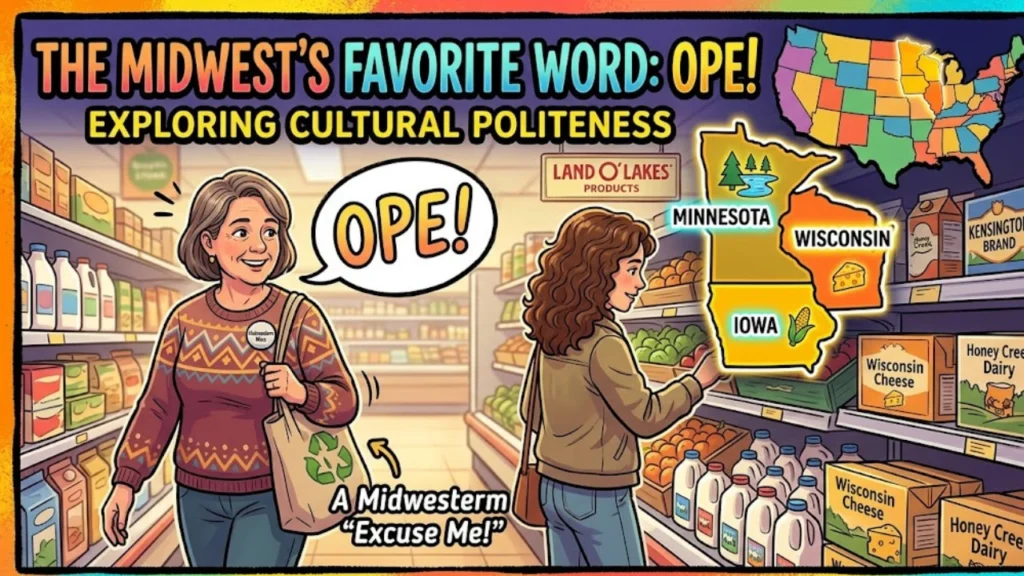
“Ope” is used across the country, not just in one region — but it’s still closely tied to Midwestern identity in pop culture.
Comedians like Charlie Berens helped turn “ope” into a recognizable symbol of Midwestern politeness, alongside phrases like “yeah, no” and “welp.” That kind of comedy spread the word far beyond Wisconsin, Minnesota, and Iowa.
The word even reached national politics. During the 2024 presidential campaign, Minnesota Governor Tim Walz used “ope” spontaneously at a rally in Eau Claire, Wisconsin — a moment that put the word in front of a national audience and reinforced its Midwestern reputation, according to reporting summarized on Wikipedia’s entry on the interjection.
Generational habits differ, too:
Millennials often pick it up naturally from spoken conversation and use it without thinking twice.
Gen Z tends to use “ope” more deliberately online, often pairing it with emojis or reaction GIFs in captions and comments.
Linguists also point to age grading — the idea that older speakers may use “ope” more instinctively simply because they’ve said it their whole lives, while younger speakers picked it up through memes and video clips instead.
How to Use “Ope” in Texts, Social Media & Everyday Conversation
“Ope” works best in low-stakes, casual moments — texts, DMs, and social captions where a small mistake needs a light touch.
Common situations where people type it:
Texting a friend: “Ope, sent that to the wrong number.”
Instagram or TikTok comments: “Ope, didn’t expect this to blow up.”
Group chats: “Ope, my bad — wrong thread.”
It’s easy to confuse “ope” with similar words, but the tone is slightly different for each:
Word
Feeling
Best Used For
Ope
Gentle, spontaneous
Small surprises, minor bumps
Oops
Mild embarrassment
Clear mistakes
Whoops
Playful
Bigger accidents
My bad
Direct responsibility
Owning a mistake
Uh-oh
Concern
Sensing a problem coming
If someone sends you an “ope,” a short, friendly reply keeps the tone light:
“No worries!”
“Happens to the best of us.”
“All good, don’t stress.”
When NOT to Use “Ope” (Professional & Serious Situations)
“Ope” doesn’t belong in every conversation. Because it’s casual by nature, it can feel out of place when the situation calls for more care.
Avoid it in:
Work emails or client messages — swap “Ope, forgot the attachment” for “I apologize — please find the attachment now attached.”
Serious or emotional conversations — grief, health issues, or personal struggles need sincerity, not a casual filler word.
International or formal conversations — since “ope” is deeply tied to American English, it may confuse readers unfamiliar with U.S. slang.
A simple rule: if the mistake is small and the relationship is casual, “ope” fits naturally. If the stakes are higher, choose clearer, more direct language instead.
FAQ’s
What does “ope” mean?
“Ope” is a casual interjection used to react to a small mistake, mild surprise, or an accidental interruption — similar in feeling to “oops” or “oh.”
Who says ope?
People across the United States say “ope,” though it’s most strongly associated with Midwestern states like Wisconsin, Minnesota, and Iowa. Linguists have also found the same sound used in Canada and the United Kingdom.
Is it “op” or “ope”?
The correct spelling is “ope,” with the silent “e” at the end. “Op” is not a recognized spelling of this expression and is usually just a typo.
What does “ope” mean on TikTok?
On TikTok, “ope” is used the same way as in texting — a quick reaction to something surprising, awkward, or unexpectedly relatable, often paired with laughing emojis or reaction videos.
Conclusion
“Ope” isn’t slang someone invented — it’s a natural sound turned into a word, backed by real linguistic research and centuries of spoken habit. Next time you bump into someone or fire off a text to the wrong chat, you’ll know exactly why “ope” slips out before anything else.
Jack Waseem is the founder and lead editor of MeaningsLoop. He started the site out of a simple frustration: too many word-meaning searches online led to cluttered pages, thin definitions, and content clearly written for search engines rather than for people. Jack set out to build something closer to a well-kept paper dictionary — dependable, clearly written, and genuinely useful.