You saw ISTG in text or comment and had no clue what it meant. You’re not the only one. This acronym shows up everywhere — texts, TikTok captions, Discord chats — and it moves fast through group conversations.
Here’s the short answer: ISTG stands for “I Swear To God.” It’s used to add weight to a sentence, not to make a religious statement. Below, you’ll find exactly how it’s used, where it came from, and how to reply when someone sends it to you.
Table of Contents
What Does ISTG Mean?
ISTG is a texting acronym for “I Swear To God.” People use it to sound more serious, more honest, or more emotional about whatever they’re saying.
Most of the time, ISTG meaning in text has nothing to do with religion. It’s closer to saying “seriously” or “no joke.” Someone texting “ISTG my WiFi keeps cutting out” isn’t taking an oath — they’re just venting with extra emphasis.
Linguists call this kind of shift semantic bleaching — a phrase loses its literal, original weight the more casually it gets used. “Oh my God” went through the same thing decades ago, and “I swear to God” is following the same path online.
Where Did ISTG Come From?
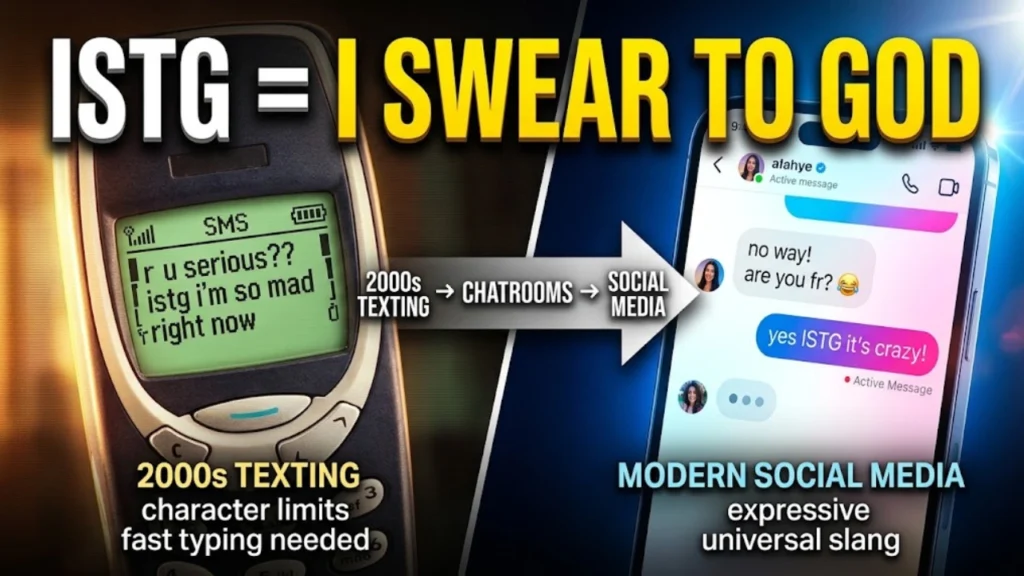
Short texting acronyms didn’t appear out of nowhere. They came from a real limit: early mobile phones only allowed 160 characters per SMS message, according to the GSM Association’s messaging standards. That pushed people to shorten everything.
“I swear to God” is an old phrase, used in everyday speech for generations to stress that something is true. As texting and instant messaging took off in the 2000s, people started compressing it into ISTG for speed.
From there, it spread into AIM and early chatrooms, then into texting, and now into every major social platform. The origin of ISTG is really just the story of digital communication getting faster — abbreviations like BRB, LOL, and IDK followed the same path.
How to Use ISTG in a Sentence
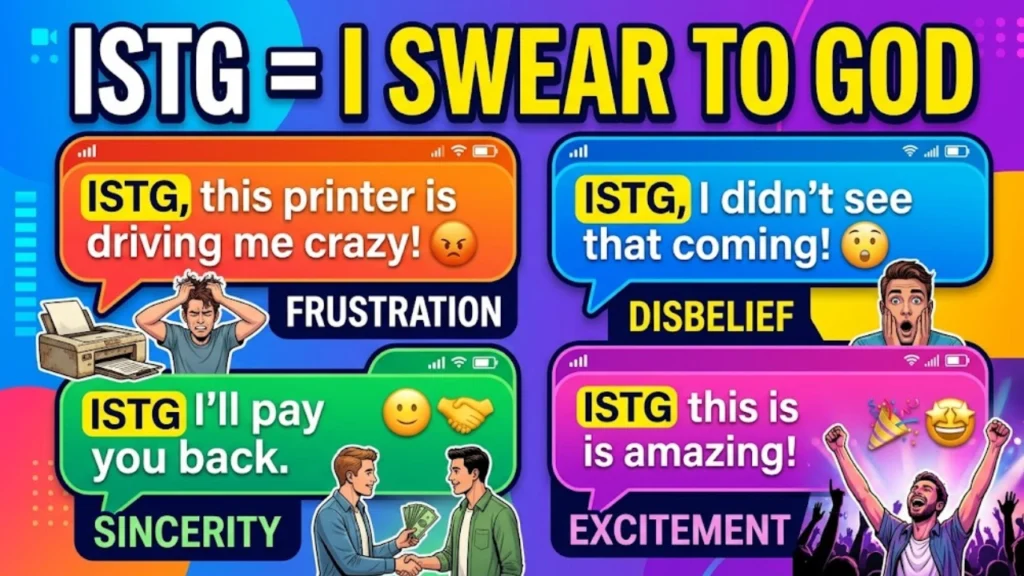
ISTG isn’t a one-mood word. The tone changes completely based on context, punctuation, and what comes after it.
Frustration “ISTG if this printer jams one more time, I’m done.”
Disbelief “ISTG I did not see that coming.”
Sincerity or a promise “ISTG I’ll pay you back Friday.”
Excitement “ISTG this is the best burger I’ve had all year.”
Notice the pattern: ISTG almost always sits at the start of the sentence. That placement is what gives it punch — it front-loads the emotion before the actual point.
ISTG on Instagram, TikTok, Snapchat and Group Chats
Where ISTG shows up changes how it lands.
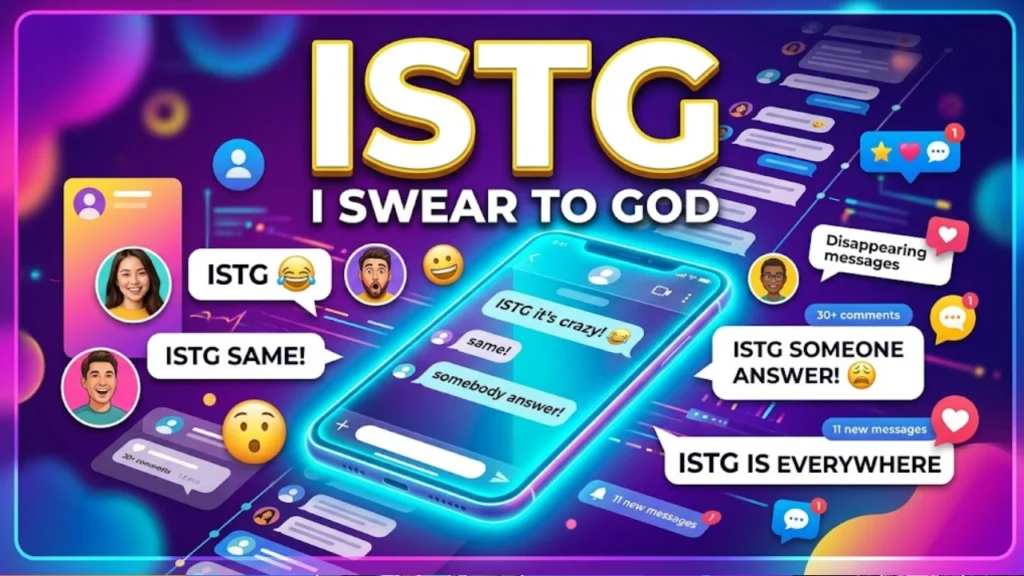
On Instagram and TikTok comments, it’s usually reaction-based — added under a funny video or a relatable post to show genuine agreement or shock.
On Snapchat, it tends to be quick and personal, often between close friends reacting to something in real time.
In group chats, ISTG frequently signals urgency or a warning — “ISTG someone answer the group chat” is a common example, and it usually means the sender is mildly annoyed.
A 2023 Pew Research Center report on teens and technology found that a majority of U.S. teens use multiple platforms daily, which explains why acronyms like this one travel so quickly across apps instead of staying on just one.
ISTG Variations, Misspellings and Related Slang
Once an acronym gets popular, variations follow. A few are worth knowing.
ISTG FR FR stacks two intensifiers together — “I Swear To God, For Real For Real.” It’s used when someone wants to sound extra serious, almost like double-underlining a sentence.
ISWTG is simply a typo of ISTG, with the letters swapped. It means the exact same thing — “I Swear To God” — it’s just a common slip when typing fast.
Related terms carry a similar feeling but a different intensity:
No cap — means “no lie,” often used interchangeably with ISTG
For real — a lighter, less intense version
I promise — more formal and sincere-sounding
Knowing these related terms helps you read the full emotional range of a conversation, not just one acronym in isolation.
FAQs
What does “ISTG” mean?
ISTG means “I Swear To God.” It’s used online and in texting to add emphasis, sincerity, or frustration to a message, rather than as a literal religious statement.
How do I reply to ISTG?
Match the tone. If it’s frustration, a simple “I know, that’s rough” works. If it’s excitement, react with equal energy — “no way, tell me everything.” If it’s a promise, a quick “okay, I trust you” keeps the exchange natural.
What is ISTG FR FR?
ISTG FR FR combines “I Swear To God” with “For Real For Real.” It’s used to double down on sincerity, usually when someone feels their first statement wasn’t taken seriously enough.
What does ISWTG mean?
ISWTG is a common misspelling of ISTG, with the same meaning: “I Swear To God.” The letters get transposed easily when typing quickly on a phone.
Conclusion
ISTG is a small acronym that carries a lot of tone — frustration, honesty, excitement, or disbelief, depending on where and how it’s used. Now that you know what it means, where it came from, and how variations like ISTG FR FR and ISWTG fit in, you’ll never have to pause and wonder again.
Jack Waseem is the founder and lead editor of MeaningsLoop. He started the site out of a simple frustration: too many word-meaning searches online led to cluttered pages, thin definitions, and content clearly written for search engines rather than for people. Jack set out to build something closer to a well-kept paper dictionary — dependable, clearly written, and genuinely useful.