You got a text with “SMT” in it and now you’re stuck staring at your screen. You’re not alone. This little three-letter acronym pops up on Instagram, in group chats, and even in work emails — and it doesn’t always mean the same thing twice.
The short answer: SMT most often means “sucking my teeth” in texting and chat. It’s a way to show annoyance without typing a whole sentence. But depending on where you see it, SMT can also stand for “something,” “send me this,” or a few other things entirely. Let’s break it all down.
Table of Contents
What Does SMT Mean? (Quick Answer)
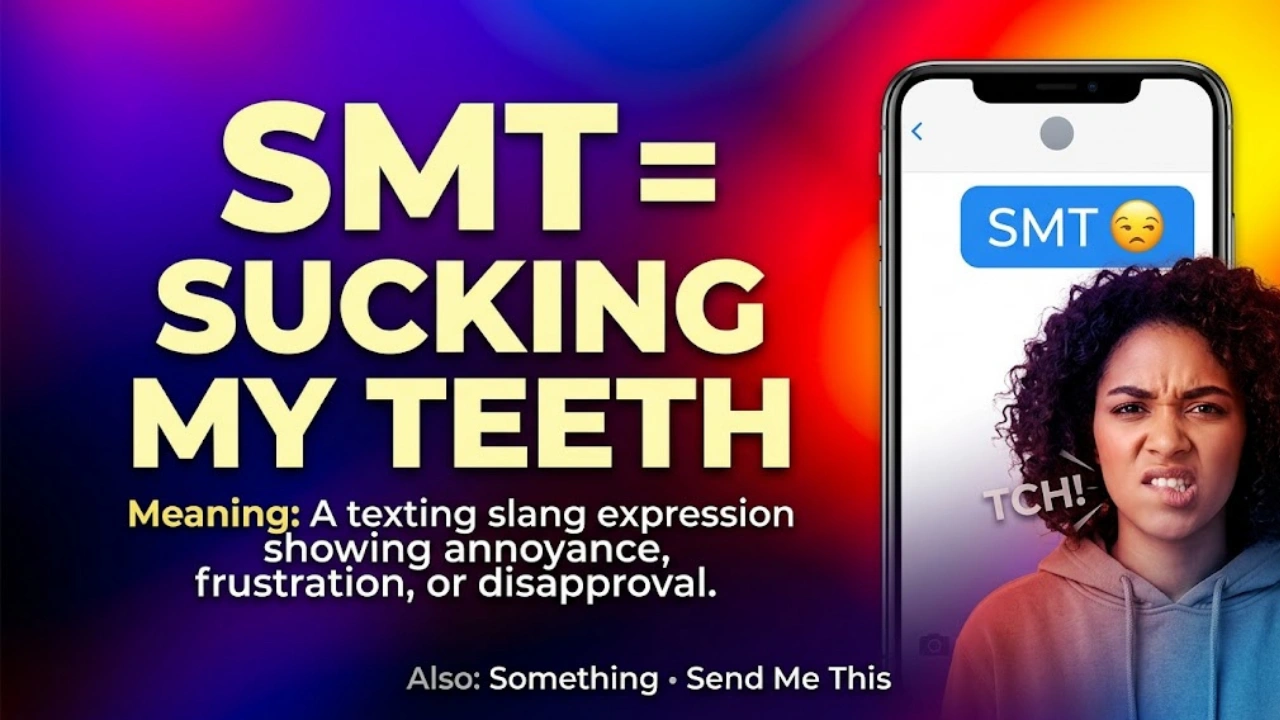
SMT stands for “sucking my teeth” in most texting and social media contexts. It’s the digital version of that annoyed “tch” sound people make when they’re irritated, unimpressed, or fed up with something.
Here’s a fast example:
“He said he’d call and then never did. SMT.”
That’s someone expressing frustration in three letters instead of a full sentence. Depending on the platform and the person you’re texting, SMT can shift meaning. On Instagram, it often means “something” or “send me this.” In a work Slack channel, it might mean a completely different thing, like a team name. Context is everything here, and we’ll walk through each one.
Must visit:
SMT Meaning in Chat and Text Messages
Texting moves fast, so people lean on short forms like SMT to keep the conversation flowing without slowing down to type full words.
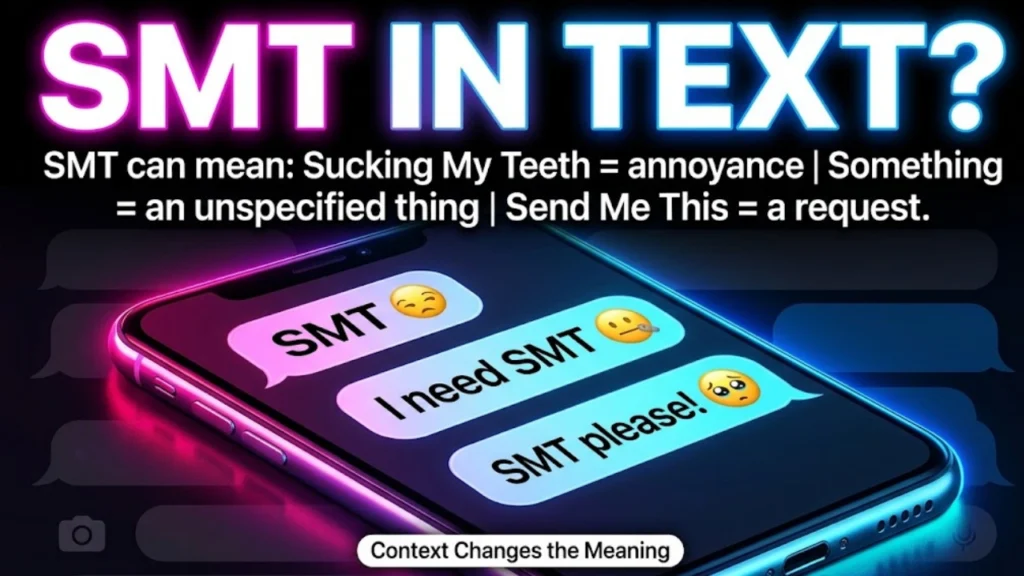
What does SMT mean in text? In everyday texting, it usually means one of three things: “sucking my teeth” (frustration), “something” (a placeholder word), or “send me this” (a request). The meaning of SMT in text depends heavily on tone. If your friend just told you bad news and replies “SMT,” they’re probably annoyed. If they’re mid-sentence and type “I need SMT to eat,” they mean “something.”
What is SMT in Instagram? On Instagram, SMT shows up constantly in comment sections and DMs. It’s a quick way to ask a creator for a link, a product name, or a source. Someone might comment “That bag is gorgeous, SMT!” under a fashion post, meaning “send me this” or “send me that link.” It can also mean “something” when used mid-caption, like “There’s SMT about this photo I love.”
SMT on Snapchat and TikTok carries a bit more personality. On Snapchat, it can mean “send me this,” “something,” or even a playful “show me that” when a friend is teasing you to reveal a new outfit or gadget in your next Snap. On TikTok, SMT leans harder into the “sucking my teeth” meaning, especially in comment replies where someone’s calling out something annoying or unfair. A comment like “She really said that? SMT” is TikTok’s version of an eye-roll.
What Does “SMT” Mean in Slang? (Other Common Meanings)
Beyond texting and social apps, SMT carries a handful of other meanings depending on the setting.
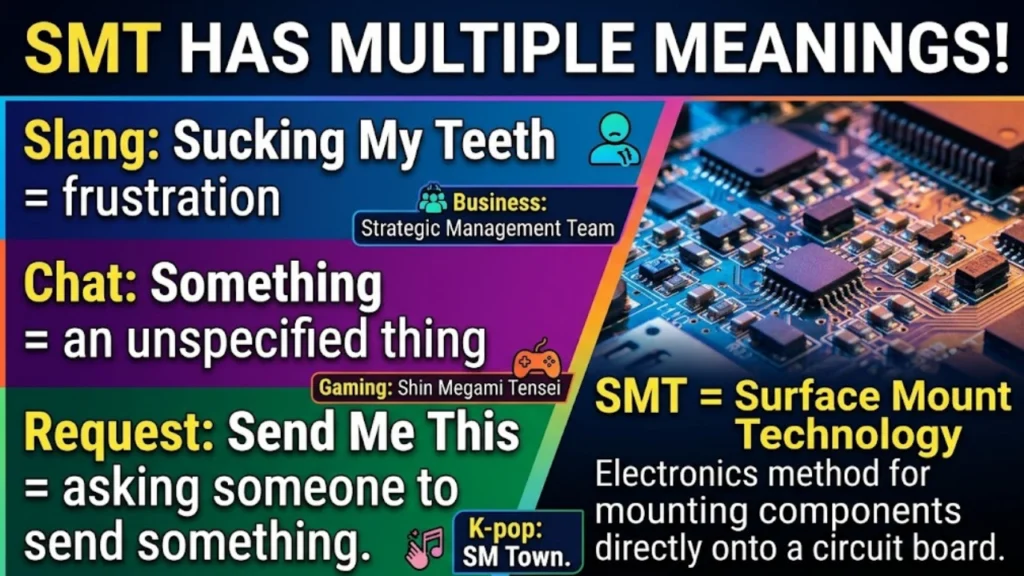
Something and Send Me This/That remain the two biggest alternates outside of “sucking my teeth.” People use SMT as a shortcut when typing fast, especially on a phone keyboard where every extra letter counts. If a friend sends “SMT good happened today,” they mean “something.” If they reply “SMT please” under your story, they want you to send it over.
In more technical or professional spaces, SMT takes on very different meaning. In electronics manufacturing, SMT stands for Surface Mount Technology — a method of soldering tiny components like resistors and chips directly onto a circuit board’s surface instead of running leads through drilled holes. According to Wikipedia’s entry on surface-mount technology, this method was developed back in the 1960s and had taken over the majority of high-tech circuit board assembly by the late 1990s, because it’s faster to manufacture and takes up far less space. That’s why nearly every modern phone, laptop, and remote control relies on it.
In business meetings, SMT often refers to a Strategic Management Team or a company’s senior leadership group — the people who set long-term direction and make big calls about where the business is headed.
Gamers and K-pop fans have their own versions too. Shin Megami Tensei, a long-running Japanese role-playing game series known for its dark storylines, is commonly shortened to SMT among gaming communities. K-pop fans use SMT to refer to SM Town, the umbrella group for artists signed under SM Entertainment, one of South Korea’s largest music labels.
SMT Meaning for Gen Z — Why It’s So Popular
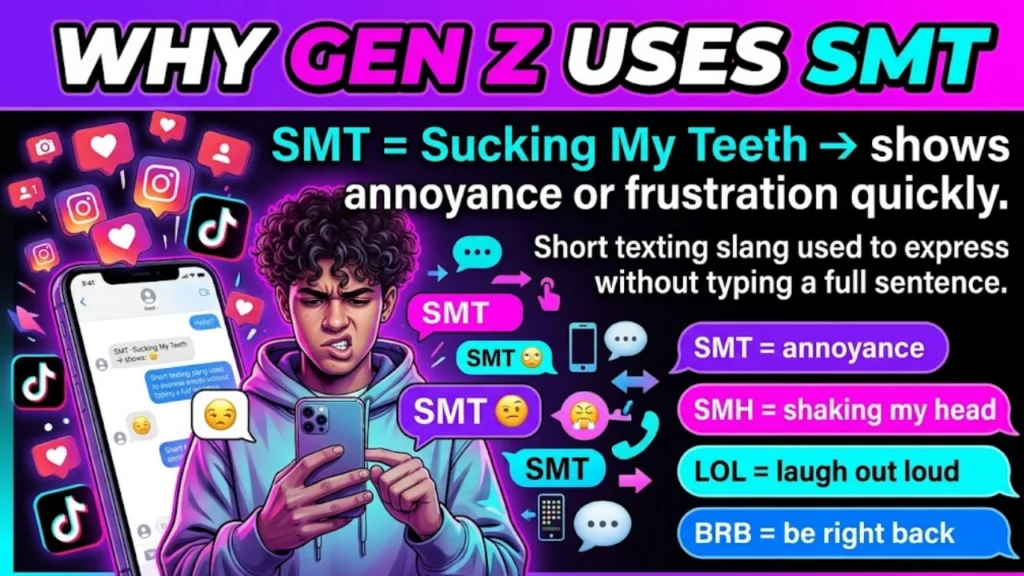
What is SMT Gen Z using it for so much? Short, expressive acronyms like SMT fit perfectly into how younger texters communicate — fast, casual, and packed with tone in just a few letters.
Acronym culture in texting really took off once character limits on platforms like early Twitter pushed people to shorten everything possible. What started as a space-saving trick turned into a whole texting language. SMT rode that wave alongside classics like LOL and BRB, but it stuck around because it carries emotion, not just information. Typing out “I am so annoyed right now” takes effort. Typing “SMT” does the same job in one breath.
Here’s a quick comparison to show how SMT stacks up against similar texting acronyms:
Acronym
Common Meaning
Example
SMT
Sucking my teeth / something / send me this
“SMT, not this again.”
SMH
Shaking my head
“SMH, can’t believe that.”
LOL
Laugh out loud
“That was LOL funny.”
BRB
Be right back
“BRB, grabbing food.”
SMT overlaps with SMH in tone (both show frustration), but SMT leans slightly more personal and expressive, almost like a sigh you can text.
Using SMT the right way comes down to reading the room. It fits naturally into texts with friends, comment replies, and casual DMs. It does not belong in a formal email, a resume, or a conversation with someone who doesn’t already know internet slang.
A few real examples of SMT used correctly:
“Another group project? SMT.” — frustration
“I gotta tell you SMT later, it’s wild.” — “something”
“That skirt is so cute, SMT!” — “send me this”
One common mix-up worth clearing up: what does STM mean in text? STM is simply SMT with the letters flipped, usually a typo rather than its own slang term. If someone sends “STM,” they almost always meant to type SMT and their thumbs got ahead of them. There’s no separate widely recognized meaning behind STM — treat it the same as SMT and read it in context.
Before typing SMT into a message, ask yourself two quick things: does the other person know internet slang, and is this a casual enough setting? If both answers are yes, SMT will land exactly the way you intend it to.
FAQ’s
What does “SMT” mean in slang?
In slang, SMT most commonly means “sucking my teeth,” used to show annoyance or frustration. It can also mean “something” or “send me this” depending on the conversation.
What does STM mean in text?
STM is typically just a typo of SMT, with the letters swapped by accident. It carries the same meaning as SMT once you read it in context.
What is SMT in Instagram?
On Instagram, SMT usually means “send me this,” used in comments and DMs when someone wants a link or product info. It can also mean “something” in captions.
What is SMT Gen Z?
Among Gen Z texters, SMT is a fast, expressive way to show frustration or make a quick request without typing a full sentence, fitting the broader trend of short, emotion-packed texting acronyms.
What does “SMT” mean in chat?
In chat apps and DMs, SMT usually means “sucking my teeth” when reacting to something annoying, though it can also mean “something” or “send me this” depending on the flow of the conversation.
Conclusion
SMT isn’t a one-size-fits-all acronym — its meaning shifts with the platform, the person, and the tone of the message. Most of the time in texting, it means “sucking my teeth,” a quick way to show you’re annoyed. But keep an eye on context, because “something” and “send me this” show up just as often, especially on Instagram and Snapchat. Once you know the signs, spotting the right meaning becomes second nature.
Jack Waseem is the founder and lead editor of MeaningsLoop. He started the site out of a simple frustration: too many word-meaning searches online led to cluttered pages, thin definitions, and content clearly written for search engines rather than for people. Jack set out to build something closer to a well-kept paper dictionary — dependable, clearly written, and genuinely useful.