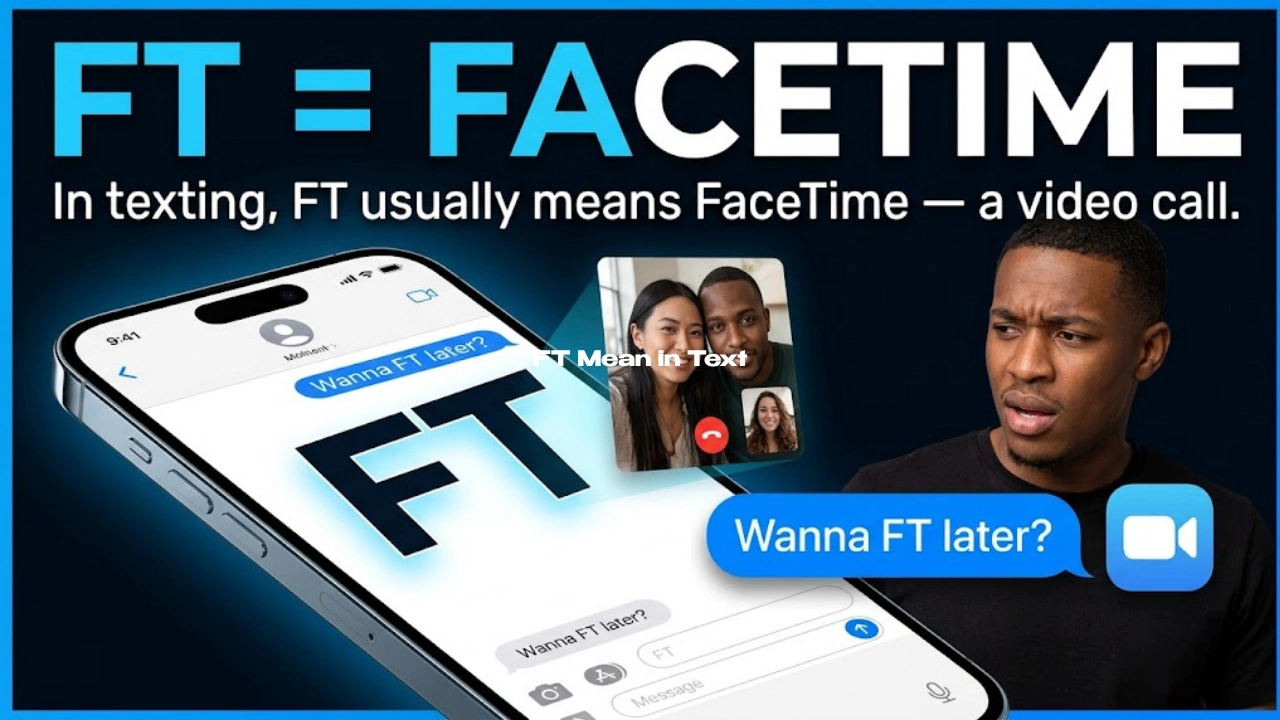
You got a text that just says “wanna FT later?” and now you’re stuck guessing. You’re not alone. FT is one of the most common shortcuts in texting, and it pops up in DMs, group chats, and captions every single day.
This guide breaks down the real FT meaning in text, how people actually use it, and every other way this two-letter abbreviation shows up online. No fluff, just the facts.
Table of Contents
What Does FT Mean in Text? (Quick Answer)
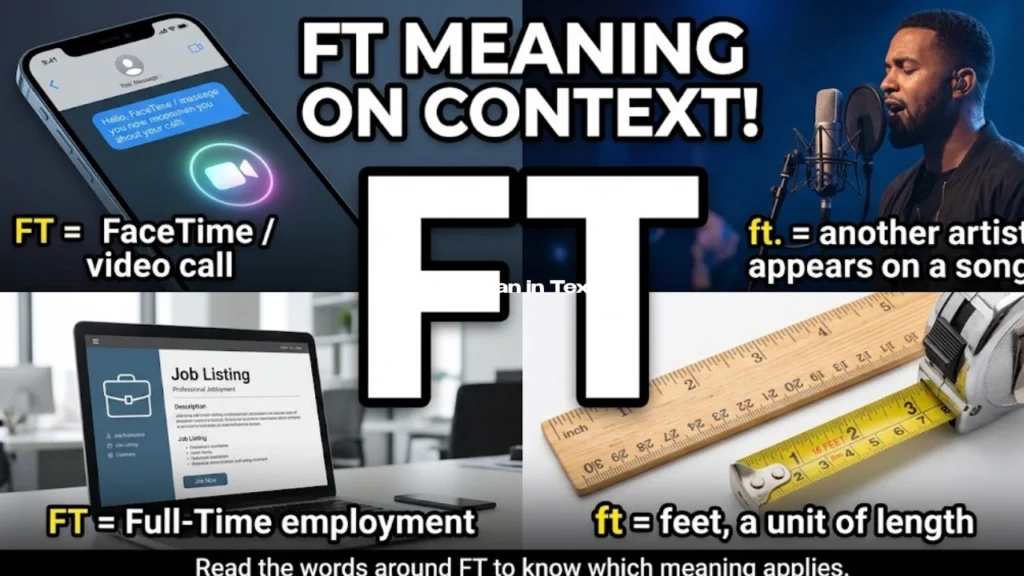
Here’s the short version: FT stands for FaceTime, Apple’s video-calling app.
When a friend texts “let’s FT,” they want to switch from typing to a face-to-face video call. FaceTime launched in June 2010 alongside the iPhone 4, and it’s built into every iPhone, iPad, and Mac since. That’s why “FT” caught on as texting shorthand — it’s just faster to type than “FaceTime.”
That said, FT isn’t a one-trick term. Its meaning bends depending on where you see it, who sent it, and what the conversation is about. Keep that in mind as you read on.
How to Use FT in a Text (Real Examples)
Using FT correctly is simple once you see it in action. It almost always shows up as a verb — something you do with another person.
Here’s what it looks like in real conversations:
“Can we FT tonight? I miss your face.”
“She didn’t pick up my FT, so I just called instead.”
“FT me when you get home, I have news.”
“We were on FT for like two hours last night.”
“I’ll FT you from the airport once I land.”
A quick style note: FT belongs in casual texting between friends, partners, or family. Save the full word for anything formal. Texting your best friend “wanna FT?” works fine. Emailing your manager “let’s FT about the project” does not — write “FaceTime” or “video call” instead in professional settings.
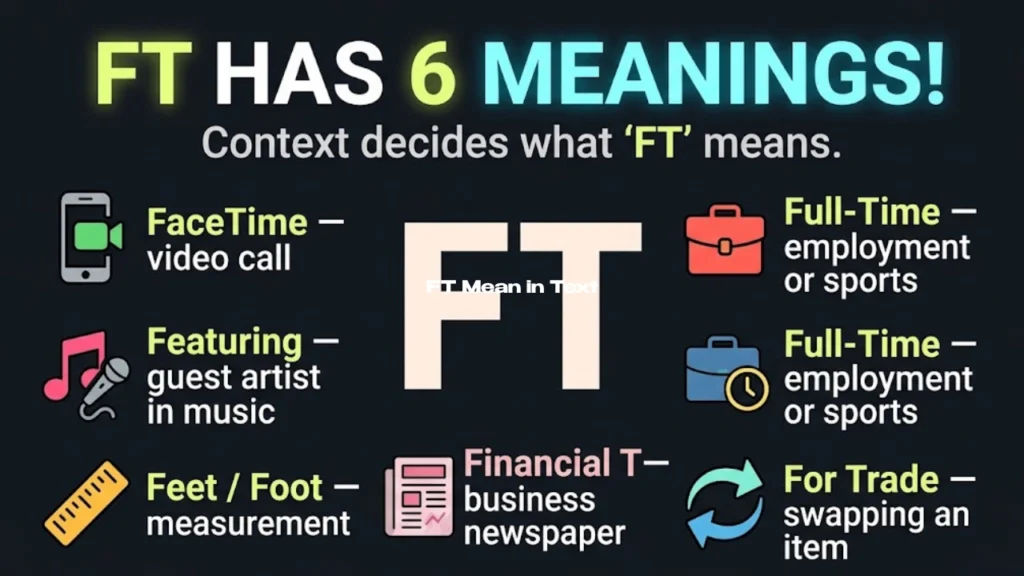
Other Meanings of FT You Should Know
Context changes everything with this abbreviation. FT carries several completely different meanings depending on where it’s used, and mixing them up leads to real confusion.
Here are the other common definitions:
Featuring — Used constantly in music, as in “Blinding Lights ft. Rosalía.” This tells you a second artist contributed to the track.
Feet or Foot — A unit of measurement. “The ceiling is 9 ft high” has nothing to do with video calls.
Full-Time — Common in job listings (“FT position available”) and in sports, especially soccer, where “FT” marks the end of a match, similar to how “HT” marks halftime.
Financial Times — A well-known international business newspaper, often shortened to FT in headlines and citations.
For Trade — Popular in gaming communities and online marketplaces, where sellers list items as “FT” to signal they want to swap, not sell.
Reading the sentence around FT almost always tells you which meaning applies. A sports score, a job post, and a text from your crush are never going to mean the same thing.
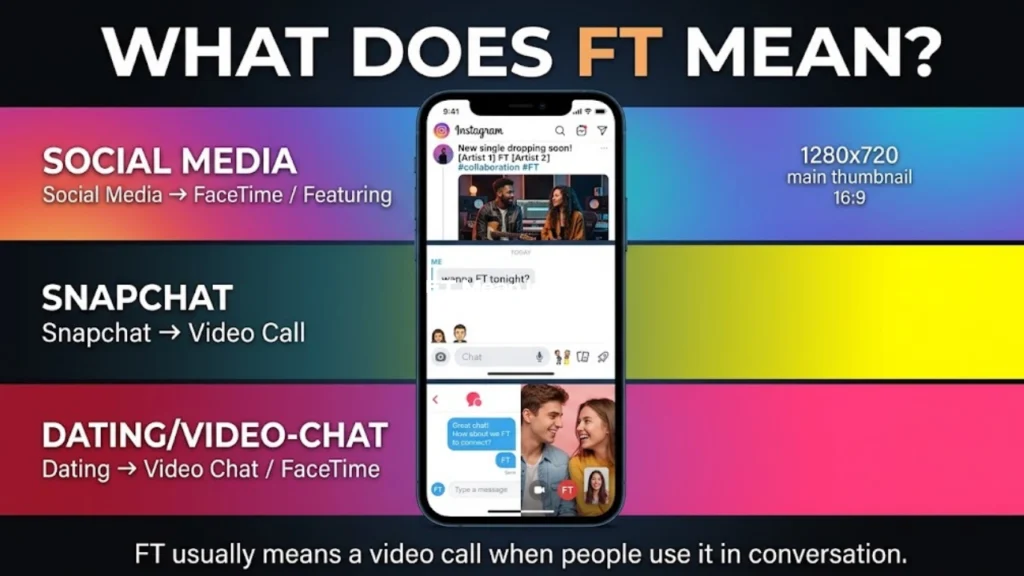
FT Meaning by Platform: Snapchat, Dating Apps & Social Media
Where you see FT changes how it should be read. Different apps and social spaces lean on this term in slightly different ways.
What is FT on social media? On platforms like Instagram, X, and TikTok, FT usually keeps its FaceTime meaning in comments and captions, especially when someone’s asking a creator or friend to jump on a call. It also shows up in its “featuring” sense under music posts and collab videos, so context is everything here too.
What is FT on Snapchat? Here’s something worth knowing: Snapchat doesn’t actually run FaceTime, since that’s an Apple-only app. When someone asks to “FT” on Snapchat, they really mean Snapchat’s own built-in video call feature. The term stuck around as general slang for “video chat,” even outside Apple’s ecosystem.
What is FT in a relationship? Between couples or people getting to know each other, asking to FT is a small but meaningful step. It signals wanting more than text — seeing someone’s face and hearing their voice builds trust faster than messages alone. It’s common in early dating stages, especially with long-distance couples or people who matched on a dating app and haven’t met in person yet.
FT vs. Other Video Call Abbreviations
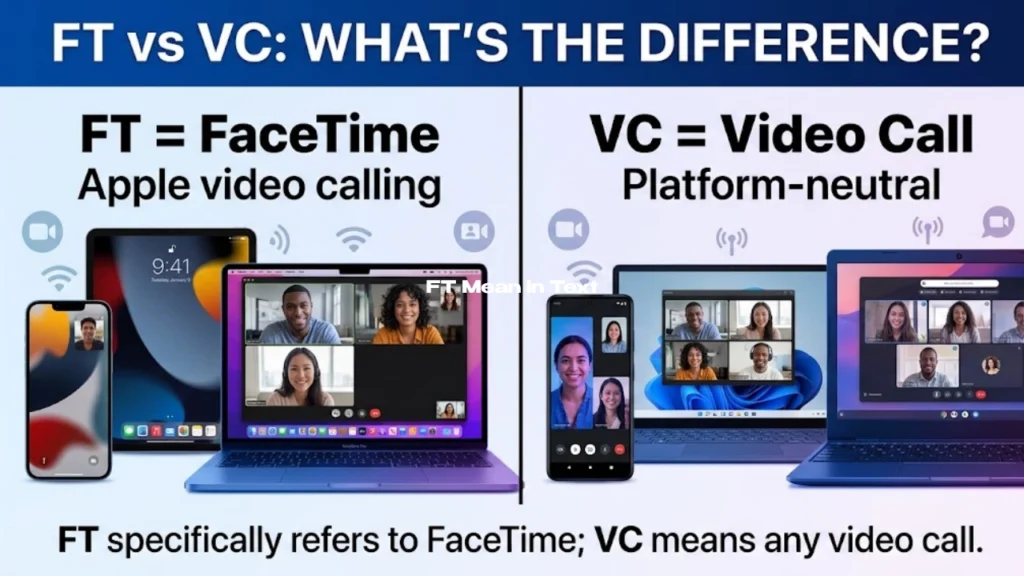
FT isn’t the only shorthand for a video call, and knowing the difference helps you avoid mixed signals.
VC, short for video call, is the platform-neutral version. Anyone can say “let’s VC,” regardless of what phone or app they’re using. FT, on the other hand, points specifically to Apple’s FaceTime.
That distinction matters because FaceTime only works on Apple hardware — iPhone, iPad, and Mac. If a friend on an Android phone asks you to “FT,” they likely mean a general video call through an app like Google Meet, Messenger, WhatsApp, or Zoom, since FaceTime isn’t installed on Android devices. So while “FT” gets used loosely as a catch-all now, the technically correct usage still ties back to Apple’s own app.
FAQ’s
Is it FT or ft?
Technically, FT should be capitalized since it’s an abbreviation. In everyday texting, though, lowercase “ft” is completely normal and just as understood. Capitalization doesn’t change the meaning here.
What is FT on social media?
On social platforms, FT usually means FaceTime when used between people, and “featuring” when used under a song or collab post. The surrounding content makes the meaning clear.
What is FT in a relationship?
In a relationship or dating context, FT means asking to video call — a way to feel closer and more connected than texting alone allows.
What is FT on Snapchat?
On Snapchat, FT refers to Snapchat’s own video calling feature, not Apple’s FaceTime, since FaceTime isn’t available on the platform.
What is FT in chat slang?
In general chat slang, FT is shorthand for “FaceTime” or “video call me.” It’s one of the most widely recognized texting abbreviations tied to real-time video conversation.
Conclusion
FT mostly means one thing in texting: FaceTime. But as you’ve seen, the same two letters can mean featuring, feet, full-time, or Financial Times depending on where they show up. Read the context, and you’ll never misread an FT text again.
Jack Waseem is the founder and lead editor of MeaningsLoop. He started the site out of a simple frustration: too many word-meaning searches online led to cluttered pages, thin definitions, and content clearly written for search engines rather than for people. Jack set out to build something closer to a well-kept paper dictionary — dependable, clearly written, and genuinely useful.