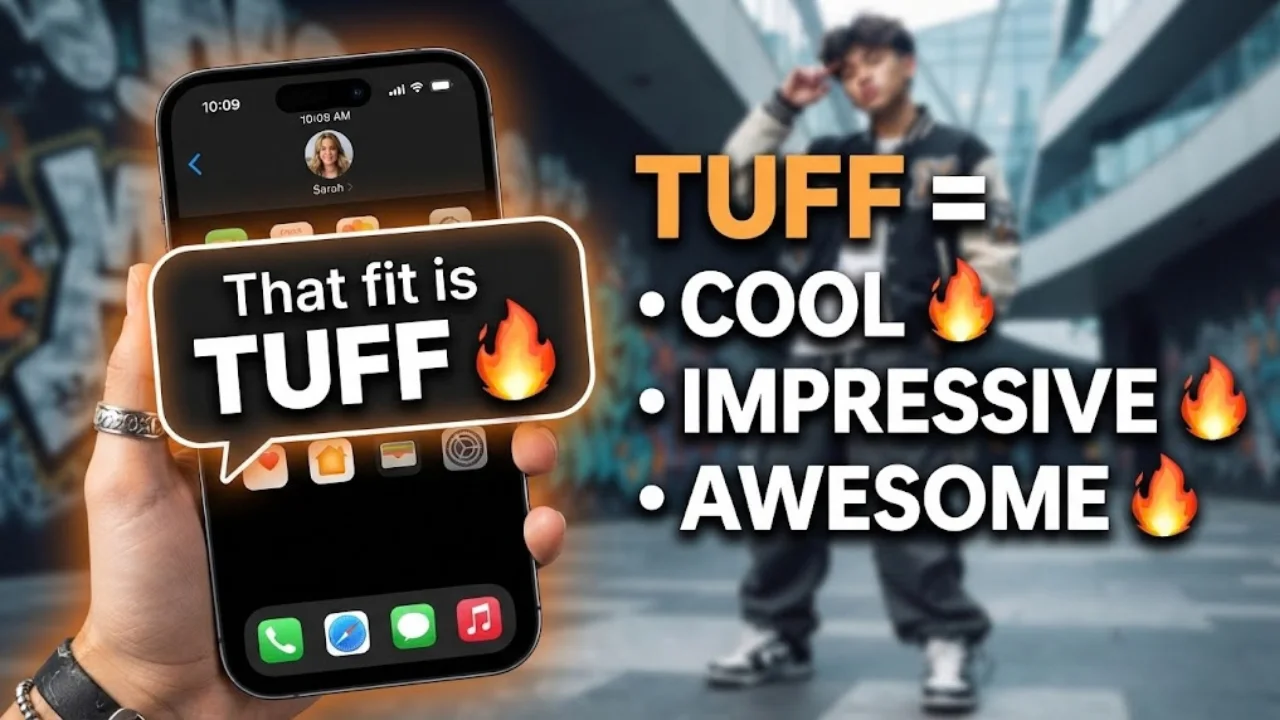
You get a text: “that fit is tuff.” Is it a compliment? Yes. Tuff means cool, impressive, or admirable.
This guide covers the tuff meaning in text, where the slang came from, how tone changes it, and what to reply.TUFF Meaning in Text.
Table of Contents
What Does TUFF Mean in Text and Chat?
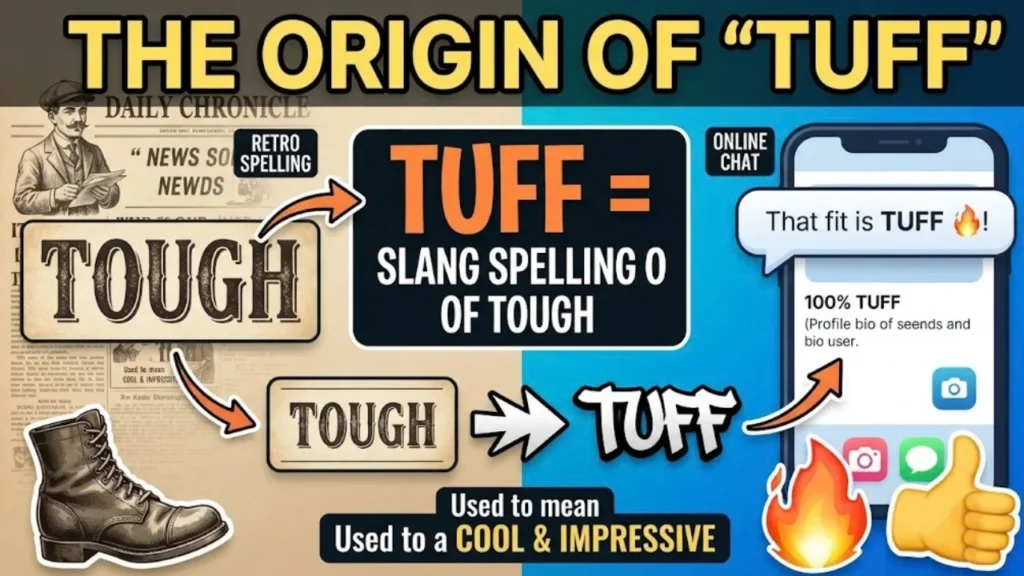
“Tuff” is a slang spelling of “tough” that people use to praise things. Here is the short version.TUFF Meaning in Text.
Tuff = cool, impressive, or awesome.
Merriam-Webster calls it an all-purpose adjective that can stand in for words like cool, awesome, or sweet. Read more in the Merriam-Webster slang entry. merriam-webster
It sounds just like “tough” (“tuhf”). You will see it as “tuff,” “TUFF,” or “so tuff.” People use it for outfits, skills, songs, and big moments.
The tuff meaning in chat is the same everywhere. It shows up on TikTok, Instagram, Snapchat, X, and Reddit, and in gaming lobbies. In the U.S., 63% of teens use TikTok, 61% use Instagram, and 55% use Snapchat, according to Pew Research Center. That is where this Gen Z slang travels. pewresearch
One more thing: tuff is also a rock. In geology, it is rock made of compacted volcanic ash. See Dictionary.com. A text will not mean that unless it is about a hike or a science class.
Where Did the TUFF Slang Meaning Come From?
Slang spellings spread fast online, but this one has old roots.
It began as a phonetic spelling of “tough.” That word already had a positive side, as in “tough cookie,” a person who is strong inside and out.
The spelling is older than TikTok. Etymonline says “tuff” was an advertiser’s spelling of “tough,” attested from 1940. Check the Etymonline entry. The praise sense is old too. Green’s Dictionary of Slang lists “tough” as US slang for excellent or admirable. etymonline
The recent boom came from memes. Know Your Meme traces it to late 2024 and early 2025, when the line “the way he smile actually so tuff” became a fill-in-the-blank template. Read the Know Your Meme entry, which is still being researched. knowyourmeme
Why did it stick? It is short, fast to type, and always upbeat. It also gives Gen Z and Gen Alpha a shared code.
Tone changes everything. The same word can be praise or a joke.
Praise examples:
“Your drawing is tuff.”
“That goal was tuff.”
“This beat goes tuff.”
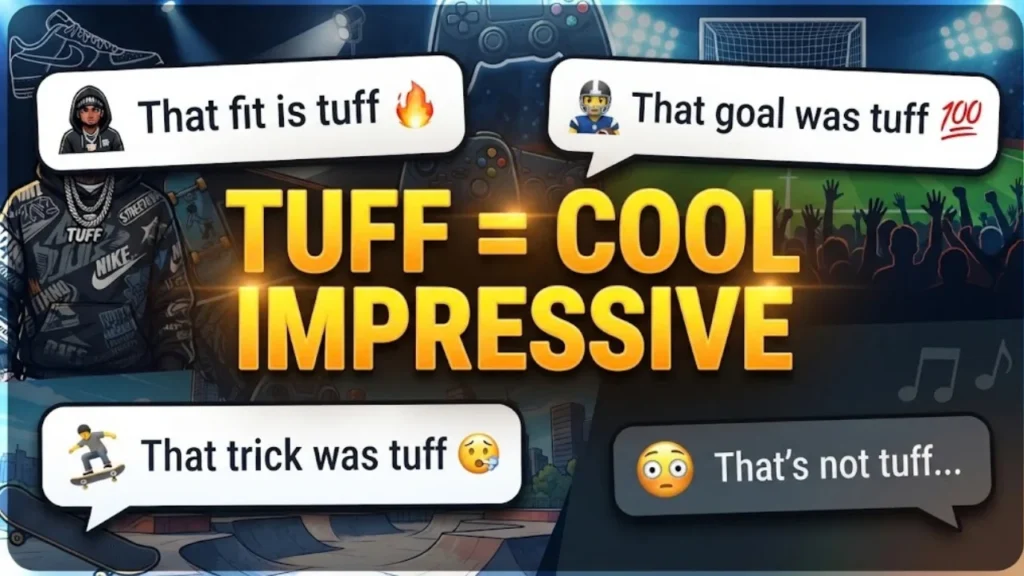
By topic: in gaming, “that clutch was tuff.” In sports, “tuff defense.” In fashion, “tuff fit.” In music, “this song is tuff.”
Sarcasm is the twist. “That’s not tuff” can mean lame or cringe. Gen Z speakers told Malay Mail it fits someone who tries to look cool but misses. See the Malay Mail report. malaymail
Emojis help set the mood. 🔥 and 💯 show real praise. 😮💨 shows “that’s wild.”
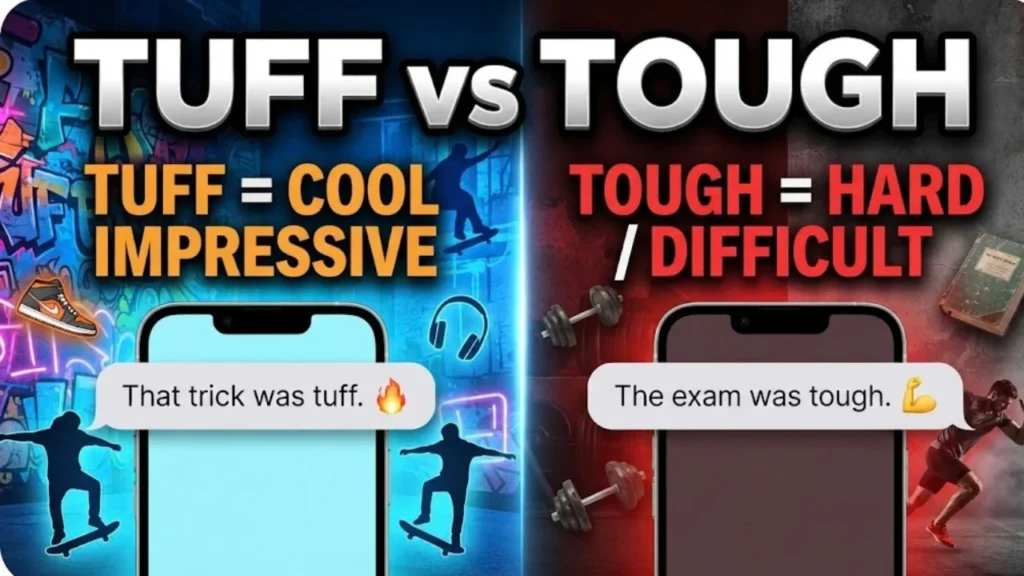
Tuff vs tough is easy:
Tough: hard, strong, or difficult. “The exam was tough.”
Tuff: casual praise. “That trick was tuff.”
Use “tough” in school essays, resumes, and work emails.
How to Reply to TUFF in Chat
A short, natural reply works best. Match the energy and keep it light.
Simple replies:
“Thanks!”
“Appreciate it.”
Playful replies:
“I try 😎”
“Fr? Thanks!”
“You’re tuff too.”
Not sure of the tone? Say, “Thanks, I think 😄.” That works either way.
Parents, no need to panic. Tuff is a positive word. Just ask your teen what it means.
FAQ’s
What does tuff mean in Gen Z?
It means cool, impressive, or admirable. Gen Z and Gen Alpha use it to praise a look, a skill, or a great move, often in TikTok comments and DMs.
Is tuff good or bad?
Good, most of the time. It is a compliment. Only sarcasm, like “that’s not tuff,” turns it negative.
What does the slang term “tuff” mean?
It is a slang spelling of “tough” that means awesome or respectable. It is not the volcanic rock, which is a separate meaning.
What to reply to tuff?
Say thanks or match the mood. “Appreciate it” or “I try 😎” both work.
Conclusion
Now you know the tuff meaning in text. It means cool, it is mostly positive, and tone decides the rest. Next time someone texts you “tuff,” just say thanks.
Jack Waseem is the founder and lead editor of MeaningsLoop. He started the site out of a simple frustration: too many word-meaning searches online led to cluttered pages, thin definitions, and content clearly written for search engines rather than for people. Jack set out to build something closer to a well-kept paper dictionary — dependable, clearly written, and genuinely useful.